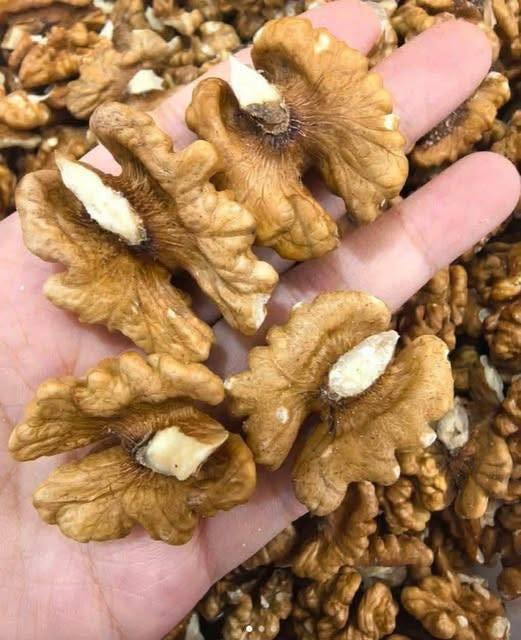
The English walnut is a type of tree nut that is widely cultivated for its edible seeds. Here’s a detailed overview:
Scientific & Common Info
- Scientific Name: Juglans regia
- Common Names: English walnut, Persian walnut
- Family: Juglandaceae
- Origin: Native to the region stretching from the Balkans to the Himalayas, but now widely grown worldwide, including the United States, China, and Europe.
Characteristics
- Tree: Deciduous, growing up to 30–40 feet (9–12 m) tall.
- Leaves: Pinnate, with 5–9 leaflets per leaf.
- Fruit: A green husk that dries and splits to reveal the hard-shelled walnut.
- Nut: Creamy, slightly sweet, and brain-shaped kernel inside a hard shell.
Nutritional Benefits
- Rich in omega-3 fatty acids (alpha-linolenic acid)
- High in antioxidants and vitamin E
- Good source of protein, fiber, magnesium, and phosphorus
- May support heart health, brain function, and anti-inflammatory effects
Culinary Uses
- Eaten raw or roasted as a snack
- Used in baking: cakes, cookies, brownies, and bread
- Added to salads, oatmeal, yogurt, and desserts
- Pressed for walnut oil
Other Facts
- English walnuts are different from black walnuts (Juglans nigra), which have a stronger flavor and harder shells.
- Store in a cool, dry place or refrigerate to prevent the oils from turning rancid.
If you want, I can also give a list of creative ways to use English walnuts in meals and snacks—from sweet to savory. Do you want me to?
