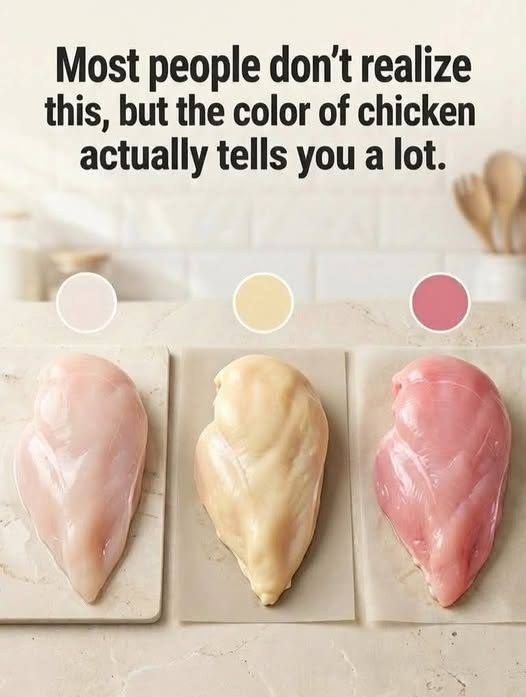
Here’s the lowdown on chicken color and what it really tells you about quality:
1. Raw Chicken Color
- Pale pink: This is normal for most raw chicken, especially fresh, high-quality meat.
- Slightly yellow skin: Can be natural, often due to the chicken’s diet (corn-fed chickens tend to have yellower skin).
- Gray or greenish tint: This is a red flag—chicken may be spoiled or starting to rot. Do not cook or eat.
- Red or purple spots: Usually blood vessels or bruising; safe if not accompanied by off odor.
2. Cooked Chicken Color
- White or light brown meat: Properly cooked chicken should be white (breast) or light brown (thighs/drumsticks).
- Pink center: Can sometimes happen in cooked thighs due to myoglobin—if internal temperature reaches 165°F (74°C), it’s safe.
- Gray or green after cooking: Indicates spoilage or improper storage.
3. What Chicken Color Does Not Tell You
- Brand or farm quality: Pale or yellow skin doesn’t automatically mean low or high quality.
- Freshness by itself: Always check the sell-by date and smell—color alone isn’t enough.
- Nutritional content: Skin color does not affect protein or fat content significantly.
4. Signs of Poor-Quality or Spoiled Chicken
- Foul, sour, or ammonia-like odor
- Slimy or sticky texture
- Gray, green, or very dark discoloration
- Excessive watery liquid in packaging
5. Tips for Buying and Handling
- Buy chicken from reputable sources.
- Store at ≤40°F (4°C) and cook within 1–2 days of purchase.
- Freeze if you’re not cooking within that time frame.
- Always use a meat thermometer to ensure proper cooking.
✅ Bottom line:
Color gives clues, but the smell, texture, and proper cooking temperature are the most reliable indicators of chicken quality and safety.
If you want, I can make a quick guide showing what safe vs unsafe chicken looks like with photos—so you can instantly tell the difference at the store or in your fridge.
Do you want me to share that?
