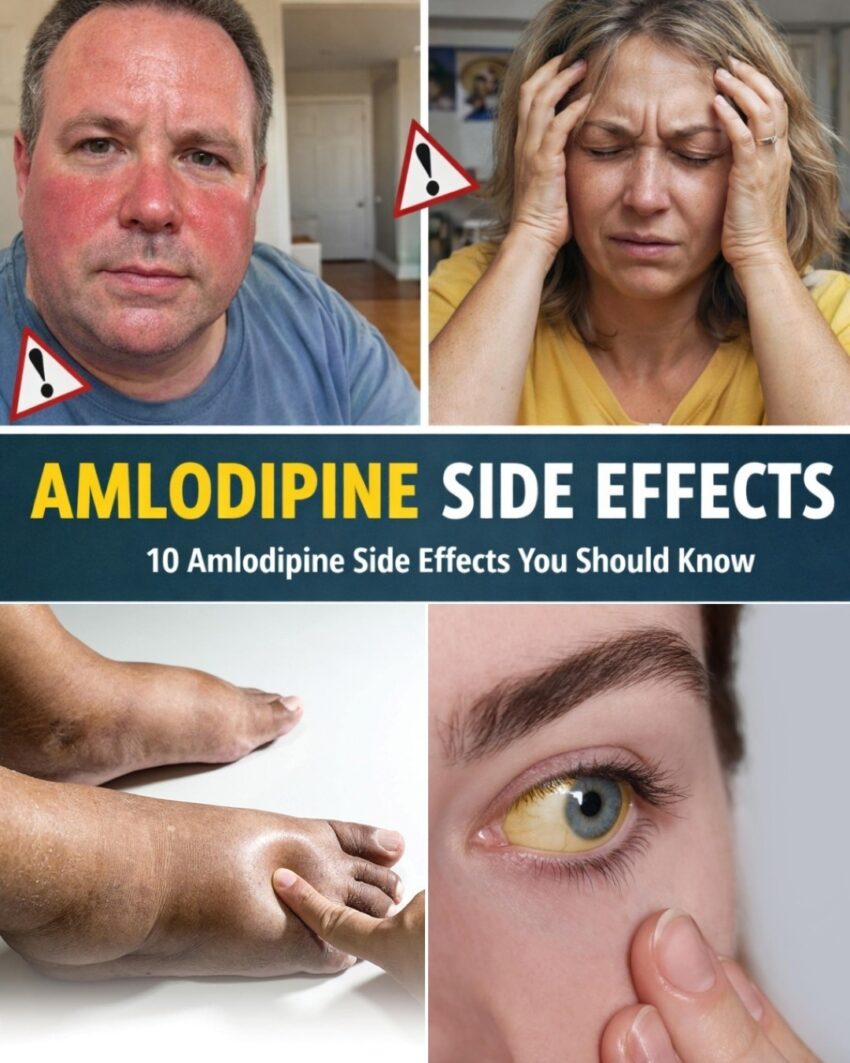
Amlodipine is a commonly prescribed medication for high blood pressure and certain heart conditions. Like all medications, it can have side effects, some mild and some more serious. Here are 12 common amlodipine side effects and how to recognize them:
1. Swelling (Edema)
- What to look for: Swelling in the ankles, feet, or hands.
- Why it happens: Amlodipine can cause fluid retention, leading to puffiness.
2. Dizziness
- What to look for: Feeling lightheaded, especially when standing up quickly.
- Why it happens: Blood pressure may drop too much, reducing blood flow to the brain.
3. Fatigue
- What to look for: Unusual tiredness or low energy levels.
- Why it happens: Lower blood pressure can make you feel weak or lethargic.
4. Flushing
- What to look for: Redness or warmth in the face, neck, or chest.
- Why it happens: Blood vessels dilate, which is part of how amlodipine works.
5. Headache
- What to look for: Persistent or mild headaches.
- Why it happens: Blood vessels expand, sometimes causing head pressure.
6. Palpitations
- What to look for: Feeling like your heart is racing or skipping beats.
- Why it happens: Changes in blood pressure can affect heart rhythm.
7. Nausea
- What to look for: Feeling queasy, stomach upset, or mild vomiting.
- Why it happens: The drug can irritate the digestive system in some people.
8. Abdominal pain
- What to look for: Stomach cramps or discomfort.
- Why it happens: Similar to nausea, it can irritate the gastrointestinal tract.
9. Sleep disturbances
- What to look for: Difficulty falling or staying asleep.
- Why it happens: Changes in blood pressure or mild nervous system effects can interfere with sleep.
10. Muscle cramps
- What to look for: Tightness, pain, or spasms in the muscles.
- Why it happens: Calcium channel effects on muscles can sometimes cause cramps.
11. Rash or itching
- What to look for: Skin redness, itching, or mild hives.
- Why it happens: Rare allergic reactions or sensitivity to the medication.
12. Shortness of breath
- What to look for: Feeling unusually breathless during routine activities.
- Why it happens: Swelling in the lungs (rare) or heart effects can trigger this.
⚠️ When to Seek Medical Attention
Call your doctor immediately if you experience:
- Severe swelling, especially around the face or tongue
- Extreme dizziness or fainting
- Chest pain or irregular heartbeat
- Severe shortness of breath
💡 Tips for managing side effects:
- Take amlodipine at the same time every day.
- Limit alcohol, which can worsen dizziness or flushing.
- Keep track of swelling or unusual symptoms and report them to your doctor.
If you want, I can also make a quick chart to visually spot these 12 side effects, so you can check symptoms easily day-to-day. It’s handy if you’re monitoring yourself or a loved one.
Do you want me to create that chart?
