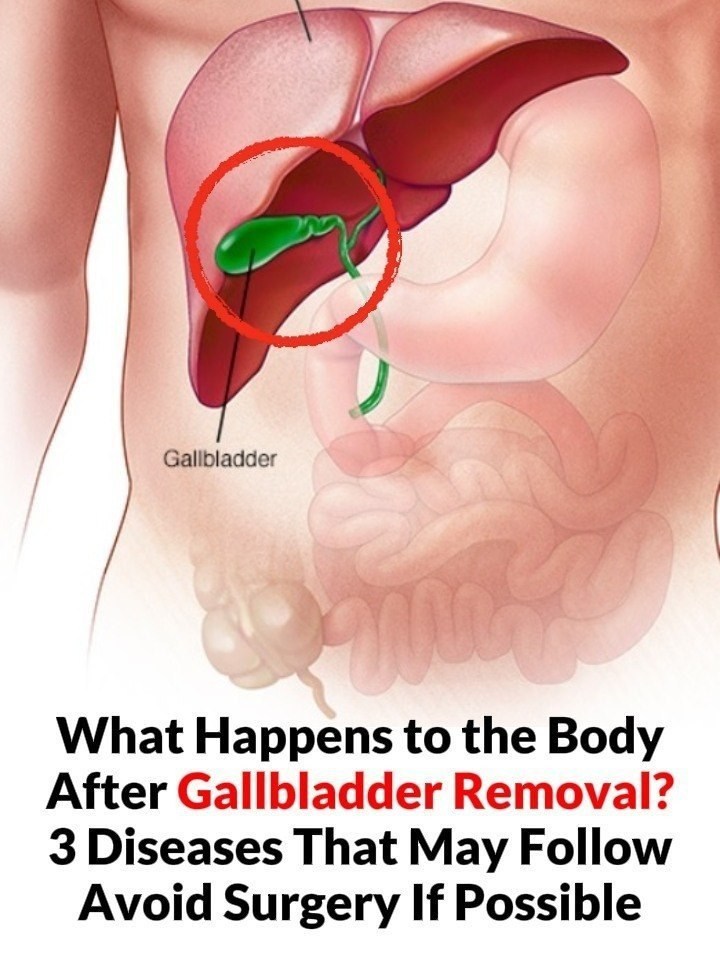
It’s important to clear up the headline first: gallbladder removal isn’t something doctors recommend lightly, and for many people it’s the safest and most effective treatment—especially for painful or complicated gallstones. Avoiding it “at all costs” can actually be dangerous in some cases.
The surgery is called Cholecystectomy, and while most people recover well, there are a few possible conditions that can develop afterward:
⚠️ 1. Postcholecystectomy Syndrome (PCS)
Some people experience ongoing digestive symptoms after surgery.
Symptoms:
- Bloating
- Diarrhea
- Upper abdominal discomfort
Why it happens:
Without a gallbladder, bile flows continuously instead of being stored and released during meals.
💩 2. Chronic Diarrhea (Bile Acid Diarrhea)
A subset of people develop persistent loose stools.
Cause:
- Excess bile entering the intestines
- Irritation of the colon
Good news:
- Often manageable with diet or medications
🪨 3. Retained or New Bile Duct Stones
Even after removal, stones can remain or form in bile ducts.
Possible complications:
- Pain
- Infection
- Blockage
This may require further treatment.
⚖️ Should You Avoid Gallbladder Surgery?
Not necessarily—and here’s the key point:
When surgery is usually necessary
- Recurrent gallstone attacks
- Infection (cholecystitis)
- Pancreatitis caused by stones
- Blocked bile ducts
Delaying surgery in these cases can lead to serious complications.
When you might try alternatives first
- Mild or infrequent symptoms
- No complications
Doctors may suggest:
- Low-fat diet
- Weight management
- Monitoring symptoms
🧠 The Reality
- Millions of people live perfectly normal lives without a gallbladder
- Complications exist, but serious long-term problems are not common
- The risks of not treating severe gallbladder disease can be much worse
✅ Bottom Line
The idea that you should always avoid gallbladder removal is misleading. It’s about timing and necessity:
- If symptoms are mild → conservative management may help
- If symptoms are severe or dangerous → surgery is often the safest option
If you want, I can explain what diet to follow after gallbladder removal or how to tell if your symptoms actually require surgery.
