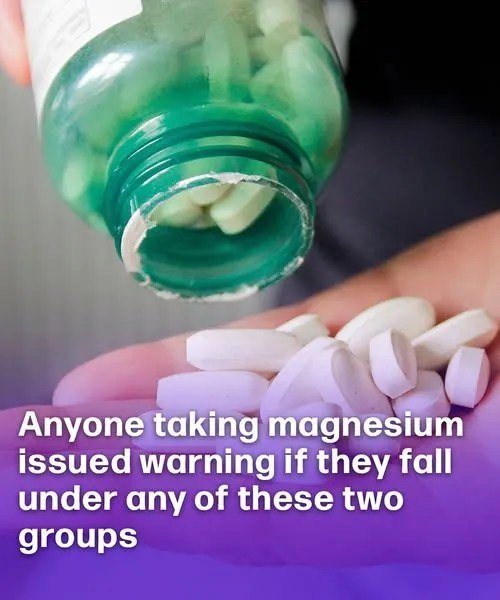
Here’s the latest expert‑backed warning about magnesium supplements—including who may be at higher risk of harm from them:
⚠️ What Health Experts Are Warning About
While magnesium supplements are commonly taken for sleep, muscle cramps, stress, or heart health, they’re not risk‑free—especially if taken unnecessarily or in high doses. (Healthline)
❗1. Risk of Too Much Magnesium
- Most adults can safely take up to ~350 mg/day of supplemental magnesium. Going above this, especially without medical guidance, may lead to side effects like nausea, diarrhea, stomach cramps, or more serious issues like very low blood pressure or irregular heartbeat. (Healthline)
- Extremely high supplement intake can even lead to magnesium toxicity (hypermagnesemia), causing confusion, weakness, trouble breathing, and, in very rare severe cases, cardiac arrest. (Office of Dietary Supplements)
🧠 Two High‑Risk Groups Experts Specifically Warn About
- People with impaired kidney function
- The kidneys normally remove excess magnesium. If kidney function is reduced (as in chronic kidney disease), magnesium can accumulate in the blood and cause serious toxicity. (ScienceInsights)
- Older adults can be especially vulnerable because kidney function often declines with age—even if they don’t have overt kidney disease. (ScienceInsights)
- People taking certain medications or with certain health conditions
- Certain heart, blood‑pressure, or antibiotic medications can interact with magnesium, altering how much stays in the body or how the drugs work. (Healthline)
- Those with heart rhythm problems, gastrointestinal absorption issues, or who use magnesium‑containing laxatives or antacids in high amounts can also be at increased risk of side effects. (Healthline)
🩺 General Expert Advice Before Taking Magnesium Supplements
✔️ Don’t take magnesium routinely unless deficient—there’s no strong evidence that most people need extra magnesium if they already get enough from food like leafy greens, nuts, seeds, and whole grains. (Office of Dietary Supplements)
✔️ Talk to a healthcare provider first—especially if you’re older, have kidney disease, heart problems, or are on medication. (Verywell Health)
✔️ Watch out for side effects such as diarrhea, nausea, dizziness, or very low blood pressure. (Verywell Health)
🧠 Bottom Line
Magnesium supplements aren’t inherently dangerous for most people, but overuse or taking them without medical guidance can be risky, particularly if you have kidney issues or are on certain medications. Always check with your health provider to determine whether you truly need a supplement—and if so, what dose is safe.
If you want, I can explain which forms of magnesium (like citrate vs. glycinate) are best for specific goals (sleep, cramps, blood pressure) and how to choose a safe supplement—just let me know!
