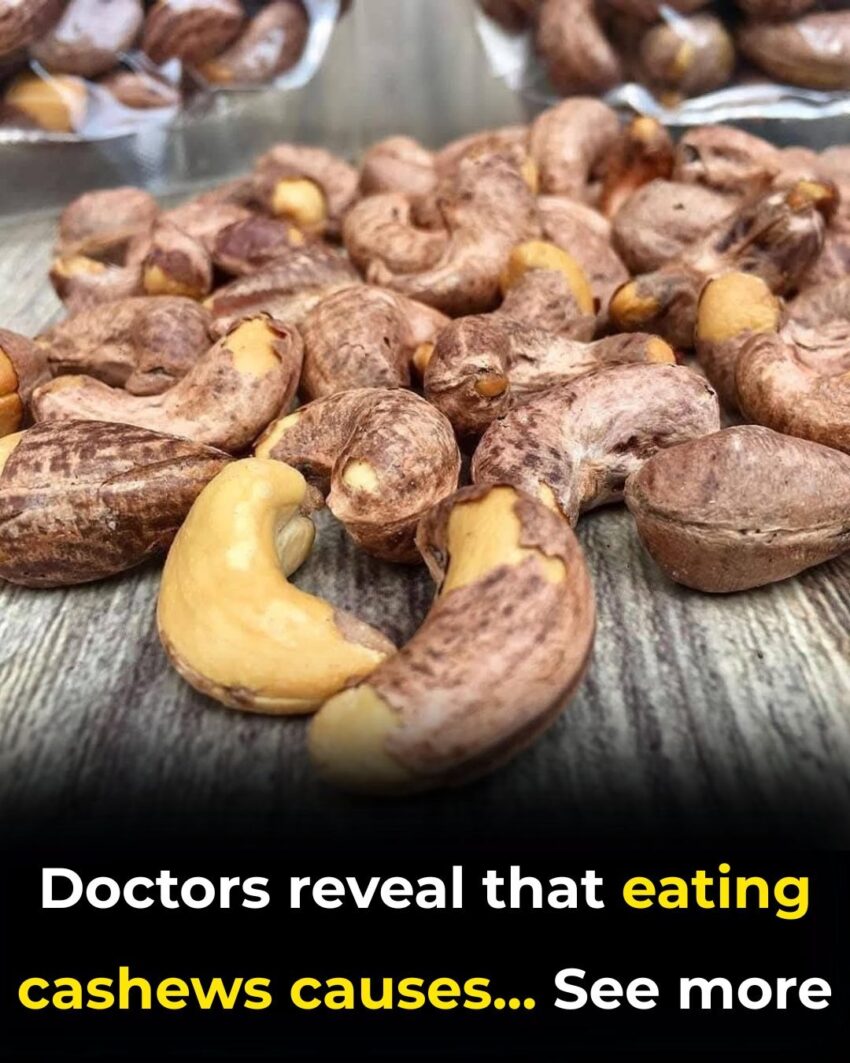
That headline—“Doctors reveal that eating cashews causes…”—is incomplete and usually clickbait. Eating cashews doesn’t secretly cause something dangerous for most people. In fact, they’re generally healthy when eaten in moderation.
Here’s the real picture:
🥜 What eating cashews actually does
✅ 1. Supports heart health
- Contains healthy fats that can help lower bad cholesterol
- Linked to reduced risk of heart disease
✅ 2. Provides important nutrients
Cashews are rich in:
- Magnesium (muscles & nerves)
- Zinc (immunity)
- Iron (blood health)
✅ 3. Gives energy
- High in calories and healthy fats
- Great for sustained energy
⚠️ Possible downsides (when overdone)
❗ 1. Weight gain
- Calorie-dense—eating too many can lead to weight gain
❗ 2. Allergic reactions
- Some people have tree nut allergies, which can be serious
❗ 3. High sodium (if salted)
- Salted cashews may raise blood pressure if eaten in excess
❗ 4. Kidney stone concerns
- Cashews contain oxalates, which may contribute to stones in sensitive individuals
🥄 How much is safe?
- A healthy portion is about a small handful (25–30g per day)
✅ Bottom line
- Cashews do not cause harm for most people
- They’re nutritious and beneficial when eaten in moderation
- Problems only happen with excess, allergies, or specific conditions
If you want, I can tell you:
- The best time to eat cashews
- Cashews vs almonds (which is healthier)
- Or how to use them for weight loss instead of weight gain
