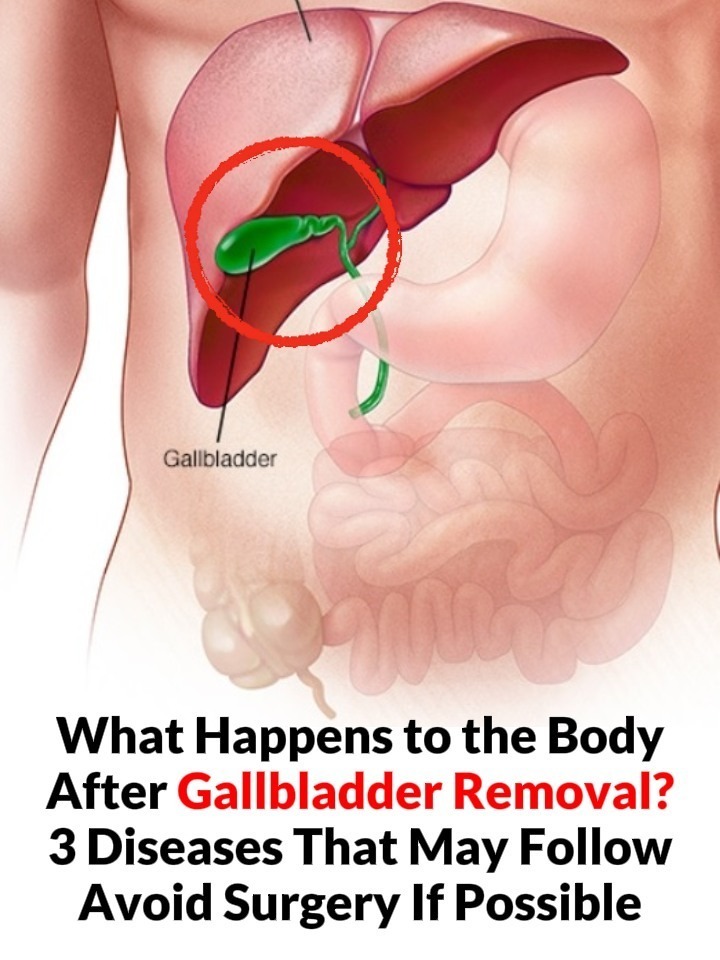
That headline is misleading.
Gallbladder removal surgery (called cholecystectomy) is one of the most common and generally safe procedures. It is usually done when there are serious problems like gallstones causing pain or infection. In most cases, people live completely normal lives without a gallbladder.
🟡 What the gallbladder does
The gallbladder stores bile, a fluid made by the liver that helps digest fats.
After removal:
- Bile flows directly from the liver into the intestine
- Digestion still works, just in a more continuous way
🩺 What happens after removal
👍 Most people experience:
- Normal digestion after recovery
- Relief from pain and gallstone attacks
- No long-term health problems
⚠️ Temporary effects (common)
Some people may have:
- Loose stools or diarrhea (especially after fatty meals)
- Bloating or gas
- Mild difficulty digesting high-fat foods
These usually improve over time.
🧠 “3 diseases after surgery” — what’s true?
Some sources warn about conditions, but they are rare or not directly caused by surgery alone:
1. Post-cholecystectomy diarrhea
- Loose stools due to continuous bile flow
- Usually manageable with diet
2. Bile reflux gastritis
- Bile irritates the stomach in some cases
- Can cause nausea or discomfort
3. Sphincter of Oddi dysfunction (rare)
- Bile flow control issues causing abdominal pain
- Not common and often treatable
👉 These are not guaranteed outcomes, and most patients never develop them.
🚫 “Avoid surgery if possible” — important truth
Doctors do not recommend surgery unless needed, but avoiding it when necessary can be dangerous.
Untreated gallbladder disease can lead to:
- Severe infection
- Blocked bile ducts
- Pancreatitis (serious inflammation of the pancreas)
- Gallbladder rupture (emergency)
🟢 When surgery is usually recommended
- Repeated gallstone pain
- Infection or inflammation (cholecystitis)
- Blocked bile ducts
- Pancreatitis caused by gallstones
🧩 Bottom line
- You can live a normal life without a gallbladder
- Most people feel better after surgery, not worse
- Serious long-term complications are uncommon
- Surgery is recommended when risks of keeping the gallbladder are higher
If you want, I can also explain:
- Foods to eat after gallbladder removal
- How long recovery usually takes
- Or natural ways to manage mild gallstone symptoms (when surgery isn’t urgent)
