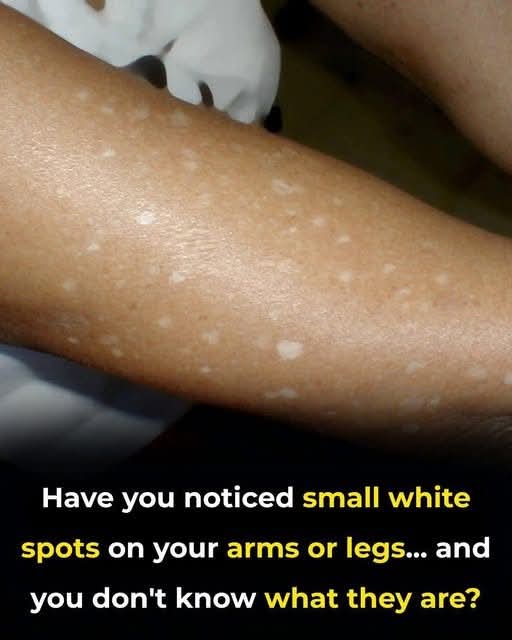
Small white spots on the arms and legs can come from several different causes—most are harmless, but some need medical attention. The key is what they look like, how long they’ve been there, and whether they’re spreading or changing.
Here are the most common possibilities:
🌿 1. Tinea versicolor (fungal overgrowth)
A very common cause of light or white patches, especially in warm climates.
- Caused by yeast on the skin (Malassezia)
- More noticeable after sun exposure
- May have fine scaling or mild itching
- Often affects shoulders, chest, arms
👉 Treatable with antifungal creams or shampoos
Tinea versicolor
☀️ 2. Sun-related hypopigmentation
Sometimes called idiopathic guttate hypomelanosis.
- Small white “confetti-like” spots
- Common on arms and legs in adults
- Linked to sun exposure and aging
- Usually harmless and permanent but cosmetic
🎨 3. Vitiligo
An autoimmune condition where skin loses pigment.
- Sharp, chalk-white patches
- Can slowly spread
- No pain or itching
Vitiligo
🧴 4. Pityriasis alba
More common in children and teens.
- Light, dry patches
- Slight scaling
- Often on face and arms
Pityriasis alba
🐛 5. Post-inflammatory hypopigmentation
After skin injury, rash, acne, or insect bites.
- Skin loses color where it healed
- Gradually improves over time
- Not dangerous
⚠️ When to see a doctor
Get checked if:
- Spots are spreading quickly
- They become completely white with clear borders
- You also notice hair turning white in patches
- There is itching, redness, or scaling that persists
🧠 Simple takeaway
Most small white spots are either:
- harmless pigment changes
- mild fungal issues
- or sun-related skin changes
But if they’re increasing or very noticeable, a dermatologist can quickly identify the cause with a simple skin exam.
If you want, you can describe what the spots look like (itchy or not, flat or scaly, how long they’ve been there), and I can narrow it down more accurately.
