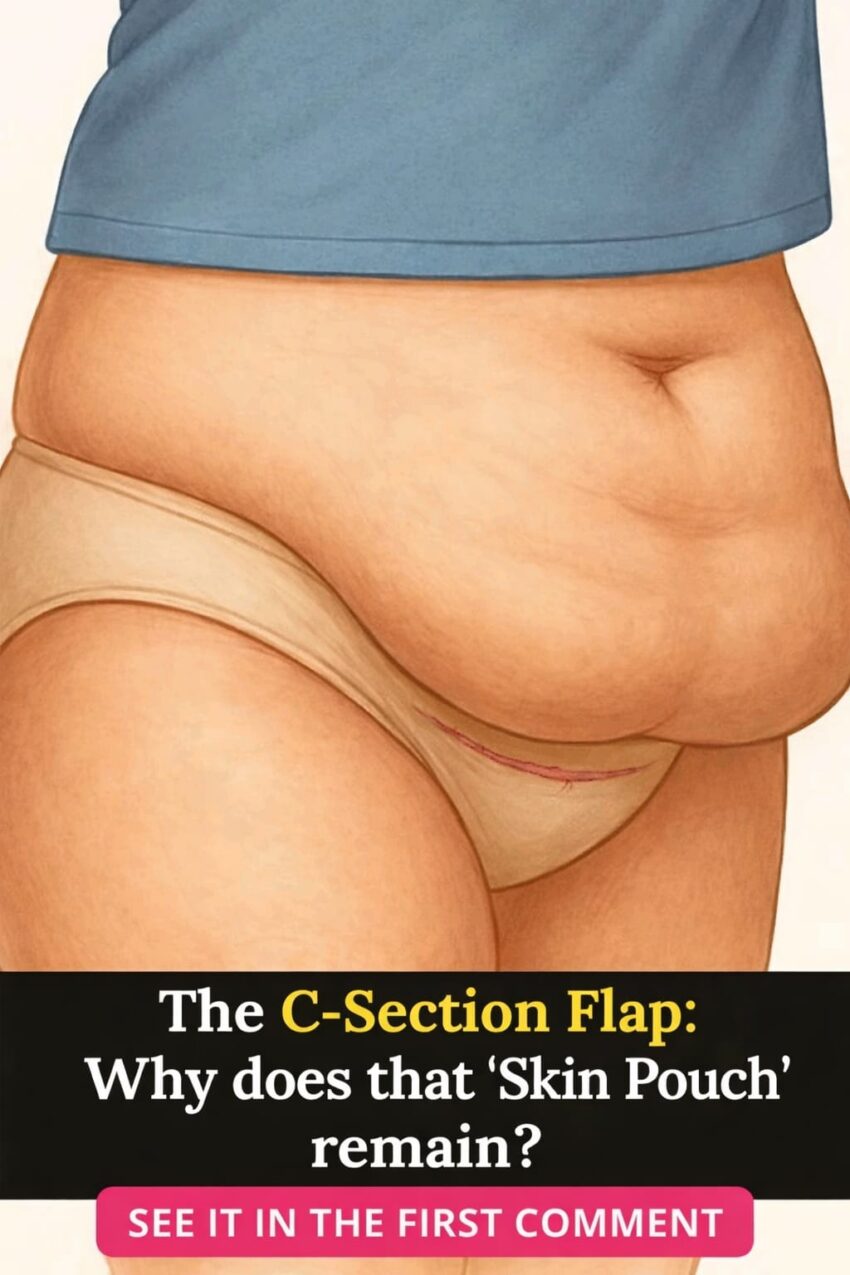
The “bag” or flap of skin some people notice after a Cesarean section is usually not something dangerous or abnormal—it’s a mix of skin, fat, scar tissue, and how the abdominal wall heals after surgery.
This is often referred to informally as a C-section shelf or overhang, and it has a few real anatomical reasons behind it.
🧠 Why that flap remains after a C-section
A Cesarean section involves cutting through multiple layers:
- skin
- fat
- abdominal fascia
- uterus
After healing, the body doesn’t always restore those layers in a perfectly smooth line.
1. Scar tissue “anchors” the skin
The internal scar can bind deeper tissues down, while the skin above remains looser. This creates a slight “step” or fold.
2. Fat distribution changes after pregnancy
Pregnancy naturally stretches abdominal fat and skin. After delivery, fat doesn’t always shrink evenly, especially below the incision line.
3. Muscle stretching (not always fully recovered)
The abdominal muscles are stretched significantly during pregnancy. In some cases (especially if there is separation, called diastasis recti), the lower belly protrudes more.
4. Gravity + incision position
Most C-section incisions are low on the abdomen (bikini line). This location naturally creates a place where:
- upper tissue can fold slightly over healed skin
- especially when sitting or bending
5. Skin elasticity varies
Age, genetics, weight gain, and multiple pregnancies affect how well skin retracts.
⚖️ Important point
This “flap” is usually:
- not a medical problem
- not a sign of poor healing
- not dangerous on its own
It is mainly a structural and cosmetic outcome of how tissues heal and settle after pregnancy + surgery.
💡 What can help reduce its appearance
Non-surgical options
- Core strengthening (especially deep abdominal muscles)
- Postpartum physiotherapy
- Gradual weight management
- Compression garments (temporary improvement in appearance)
- Treating diastasis recti if present
Medical/cosmetic options (if desired later)
- Scar revision surgery
- Abdominoplasty (tummy tuck), in selected cases
- Laser or radiofrequency skin tightening (mild cases)
⚠️ When to get checked
If the area has:
- pain or tenderness
- redness or swelling
- a hard lump under the scar
- discharge
…then it should be evaluated to rule out complications like hernia or scar issues.
🧭 Bottom line
That “bag” is usually the result of normal healing patterns + stretched skin and tissue layering after surgery, not something abnormal or “left behind.”
If you want, I can also explain:
- how to tell normal C-section shelf vs hernia
- best exercises to flatten lower belly safely postpartum
- or what actually works vs myths for “belly fat after C-section”
