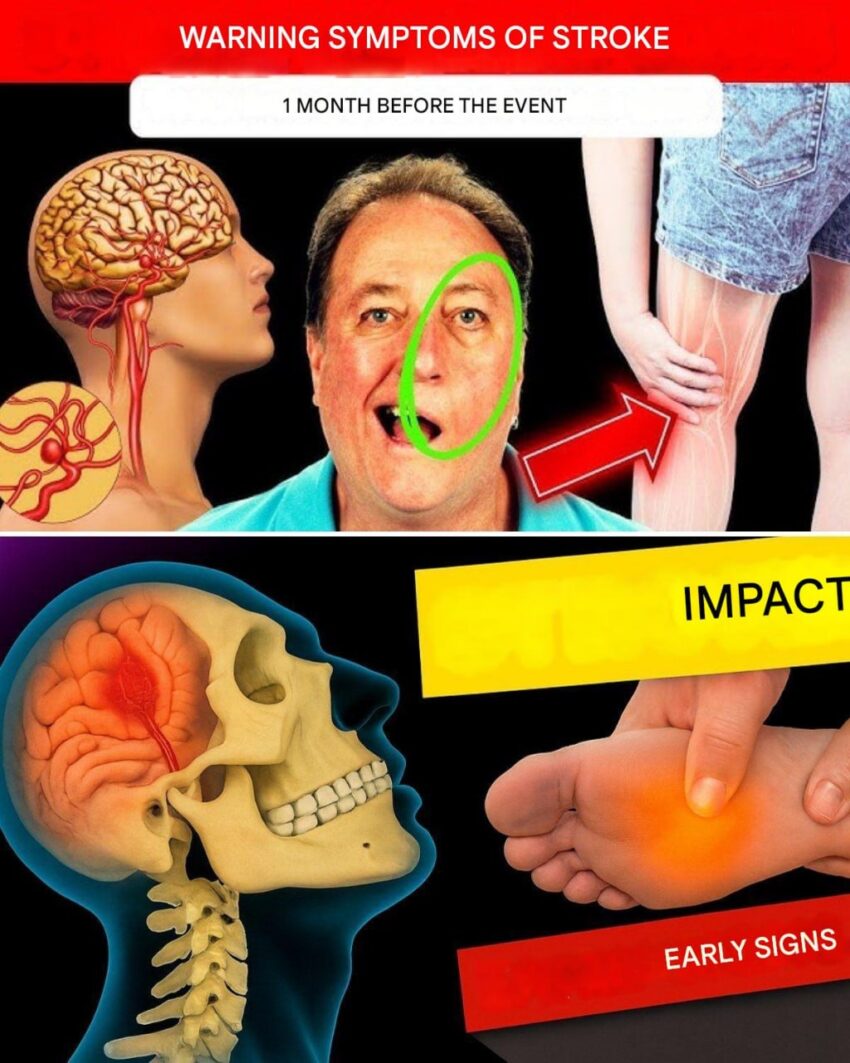
That headline is partly based on real risk factors, but it’s also misleading in one important way:
👉 A true Stroke usually does not reliably give “8 warning signs a month before” in a predictable checklist form.
However, some people do experience warning symptoms (called TIAs or risk signals) days or weeks before a major stroke.
🧠 Possible warning signs before a stroke (not guaranteed)
These can happen due to a mini-stroke (TIA – transient ischemic attack) or unstable circulation:
1. Sudden weakness or numbness
- Face, arm, or leg (often one side)
2. Brief speech problems
- Slurred speech or trouble finding words
3. Sudden vision issues
- Blurred or double vision in one or both eyes
4. Dizziness or loss of balance
- Trouble walking straight
5. Sudden severe headache
- Especially “worst headache of life”
6. Temporary confusion
- Difficulty understanding simple things
7. One-sided facial droop
- Smile looks uneven
8. Short-lived episodes (TIA)
- Symptoms disappear within minutes or hours
⚠️ Important: TIAs are a major warning sign, even if symptoms go away.
🚨 FAST test (emergency check)
If any of these happen suddenly:
- F – Face drooping
- A – Arm weakness
- S – Speech difficulty
- T – Time to call emergency help
🛡️ 9 real ways to reduce stroke risk
These are evidence-based prevention steps:
1. Control blood pressure
- The biggest risk factor
2. Manage diabetes
- High sugar damages blood vessels
3. Reduce cholesterol
- Prevents artery blockage
4. Stop smoking
- Major stroke risk multiplier
5. Exercise regularly
- 30 minutes walking daily helps a lot
6. Maintain healthy weight
- Reduces pressure on heart and vessels
7. Eat heart-friendly diet
- Less fried food, more fruits/vegetables
8. Limit salt intake
- Helps control blood pressure
9. Treat heart rhythm problems (like atrial fibrillation)
- Prevents clot formation
🧭 Bottom line
- There is no guaranteed “1-month warning checklist” for stroke
- But TIAs and vascular symptoms are real early warnings
- Prevention is far more reliable than prediction
If you want, I can also explain:
- early signs of “silent stroke”
- or a simple daily routine to lower stroke risk based on your age and lifestyle
