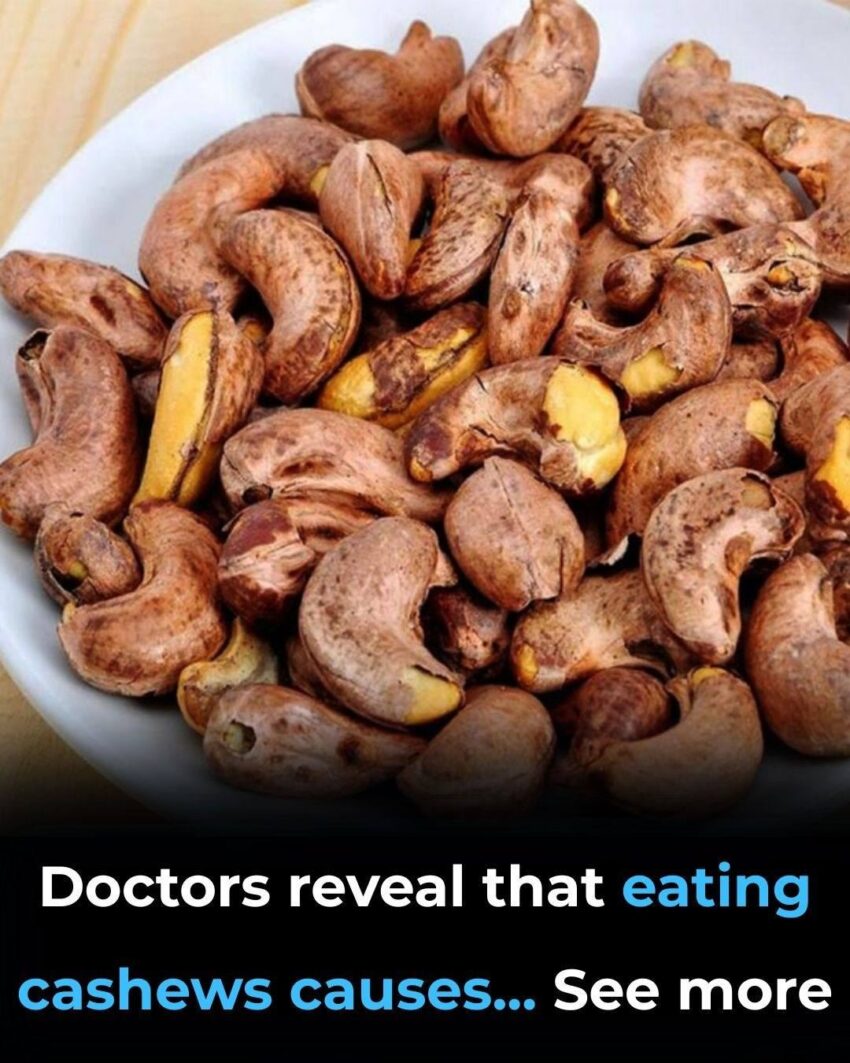
Doctors and nutrition experts say that eating cashews can be very healthy for most people, but like all foods, they can also have some unwanted effects — especially if eaten in excess or by people with specific sensitivities. Here’s an evidence‑based overview of what cashews can cause: (WebMD)
🥜 Common Effects of Eating Cashews
✅ Health Benefits (When Eaten in Moderation)
Most research shows that cashews are nutritious and can be part of a balanced diet:
• They provide heart‑healthy fats, fiber, and antioxidants. (WebMD)
• Cashews may help lower “bad” LDL cholesterol and offer nutrients like magnesium and copper. (WebMD)
• They’re lower in carbohydrates than many snacks, which could help with blood sugar control. (WebMD)
⚠️ Possible Negative Effects Doctors Mention
1. Allergic Reactions
Cashews are a common tree nut allergen. Even small amounts in allergic people can trigger:
• Hives, itching, swelling
• Abdominal pain, vomiting, diarrhea
• Trouble breathing or anaphylaxis (severe, life‑threatening)
If you suspect an allergy, avoid cashews and consult a healthcare provider immediately. (WebMD)
2. Digestive Discomfort
Because cashews contain fat and fermentable carbs (FODMAPs), eating too many can cause:
• Bloating, gas, cramps
• Diarrhea or constipation
People with sensitive digestion or IBS may be especially affected. (WebMD)
3. Gastrointestinal Issues from Overeating
Large amounts of cashews can overwhelm your gut due to:
• High fat content — slowing digestion and possibly causing discomfort
• Fiber content — can trigger gas or bloating if your system isn’t used to it (TATA AIG)
4. High Sodium (If Salted)
Store‑bought roasted and salted cashews may have a lot of added salt, and consuming them frequently could contribute to:
• Increased sodium intake
• Higher blood pressure over time if other sodium in your diet is high (MD Health)
5. Potential Kidney Stone Risk
Cashews contain oxalates, a natural compound that can combine with calcium in the body and form kidney stones in susceptible people. If you’ve had oxalate stones before, doctors often advise moderating high‑oxalate foods like cashews. (ICICI Lombard)
6. Calorie & Weight Considerations
Even though cashews contain healthy fats, they are calorie‑dense. Eating large quantities regularly may contribute to weight gain if total daily calories exceed what your body burns. (TATA AIG)
🧠 When Cashews May Not Be a Good Idea
- You have a nut allergy or strong sensitivity. (WebMD)
- You’re prone to kidney stones. (ICICI Lombard)
- You’re trying to limit sodium intake. (MD Health)
- You experience frequent digestive upset after eating nuts. (WebMD)
🥗 Bottom Line
For most healthy people, enjoying a moderate serving of cashews (about a small handful a day) is safe and nutritious. But like any food, they can cause issues in sensitive individuals or when eaten in excess — particularly allergic reactions, digestive discomfort, sodium overload, and oxalate‑related concerns. (WebMD)
Would you like a simple guide on how many cashews per day is considered a healthy portion? (Portion size matters for all of the effects above.)
