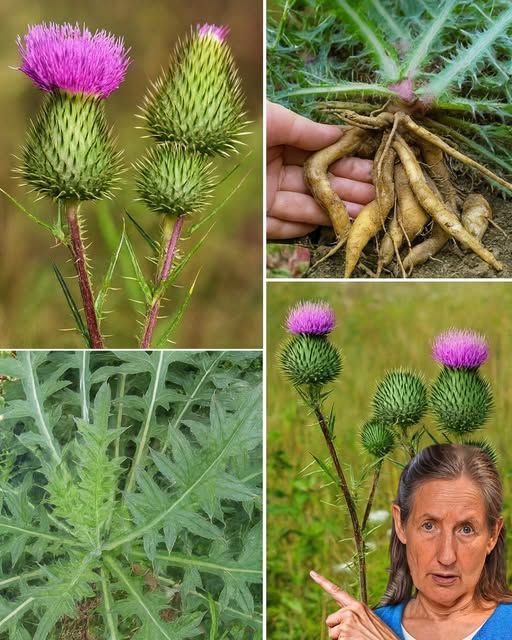
That headline has strong herbal-clickbait energy 🌿😄
Bull thistle is an interesting plant—but let’s separate folklore, early research, and reality so this stays safe and honest.
🌾 What Is Bull Thistle?
Bull thistle (Cirsium vulgare) is a wild thistle with spiky leaves and purple flowers. It’s often considered a weed, but it’s been used in traditional folk medicine in parts of Europe and Asia.
Important note: it’s not the same plant as milk thistle (Silybum marianum), which does have well-studied medicinal compounds. People confuse these two all the time.
🧪 What Bull Thistle Is Traditionally Used For
Historically (not clinically proven), parts of the plant were used as:
- Mild diuretic (to increase urination)
- Digestive aid
- Anti-inflammatory poultice for minor wounds
- General “tonic” in folk remedies
These uses come from traditional practice, not modern medical trials.
🔬 What Science Actually Says
- Bull thistle contains antioxidant compounds (like flavonoids and phenolics)
- Lab studies suggest potential anti-inflammatory and antimicrobial activity
- There is very limited human research
- No solid evidence that it:
- cures disease
- “detoxes” the body
- treats cancer
- heals the liver like milk thistle
So: interesting plant chemistry, but no miracle powers.
⚠️ Important Safety Notes
This matters more than the hype:
- ❌ Not approved as a medical treatment
- ❌ Can cause allergic reactions (especially if you’re sensitive to ragweed/daisies)
- ❌ Not recommended during pregnancy or breastfeeding
- ❌ Risky to self-harvest (easy to misidentify plants)
- ❌ Can interact with medications (especially diuretics)
“Natural” does not automatically mean safe.
🌱 Bottom Line
Bull thistle is:
- 🌿 a fascinating wild plant
- 📜 historically used in folk medicine
- 🔬 lightly studied, mostly in labs
- 🚫 not a proven health treatment
Calling it a “secret power” is marketing, not medicine.
If you’re interested in plants that actually are well-researched and beneficial, I can help with:
- milk thistle (real liver research)
- turmeric
- ginger
- chamomile
- dandelion (with safety context)
Tell me what kind of benefit you’re curious about—digestion, inflammation, sleep, energy, or skin—and I’ll point you to evidence-based options, not spiky fairy tales 🌿✨
