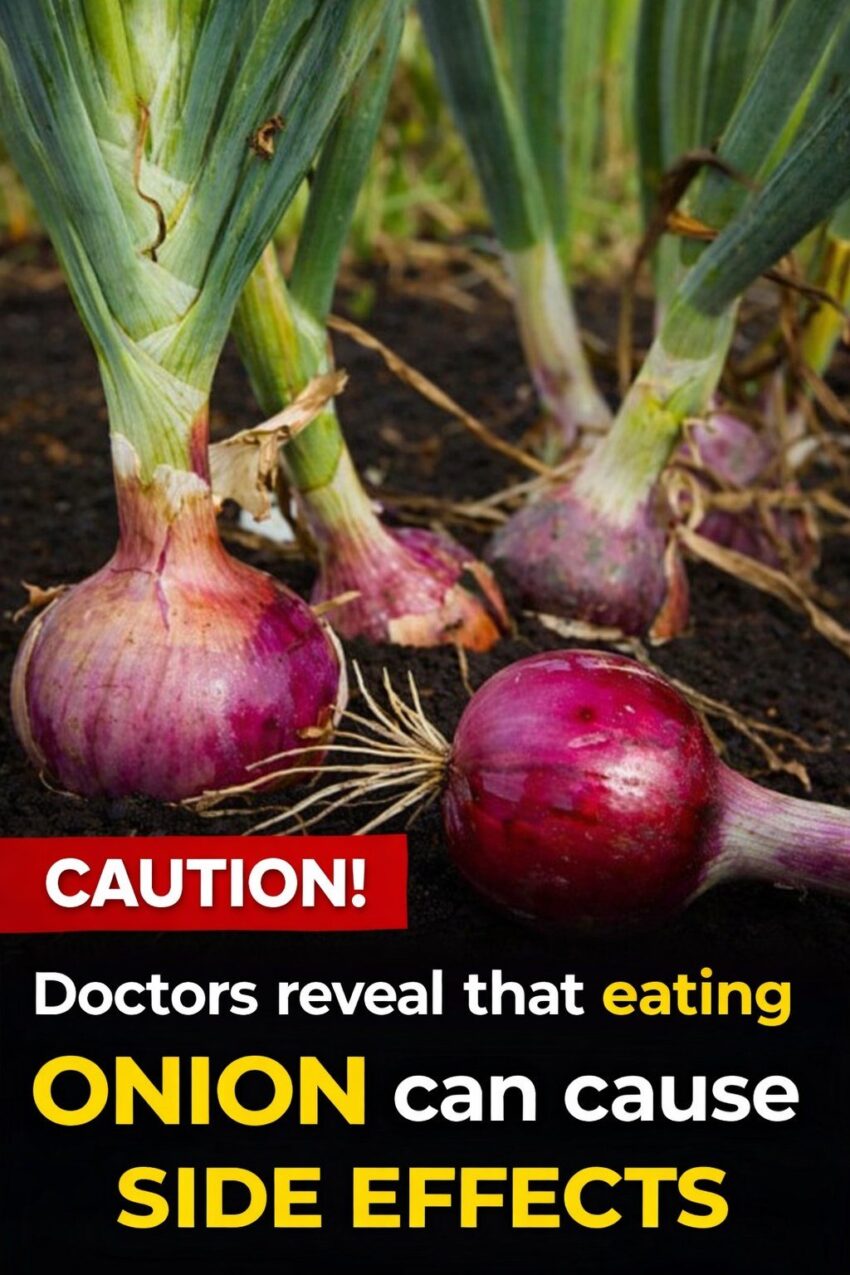
That headline is sensationalized. Onions are generally very healthy, but like many foods, they can cause side effects for some people.
Here’s what doctors actually mean:
🧅 Possible Side Effects of Eating Onions
1. Digestive Issues (Most Common)
Onions are high in fructans (a type of FODMAP carbohydrate).
This can cause:
- Bloating
- Gas
- Stomach cramps
- Diarrhea
👉 Especially in people with IBS (Irritable Bowel Syndrome) or sensitive digestion.
2. Acid Reflux / Heartburn
Onions may relax the lower esophageal sphincter, which can:
- Trigger heartburn
- Worsen GERD symptoms
Raw onions are more likely to cause this than cooked ones.
3. Allergic Reactions (Rare)
Some people may experience:
- Skin rash
- Itchy mouth
- Swelling
- Breathing difficulty (very rare but serious)
4. Blood Thinning Effect
Onions contain compounds that may slightly thin the blood.
This usually isn’t a problem — but if someone:
- Takes blood thinners (like warfarin)
- Has a bleeding disorder
- Is preparing for surgery
They should discuss large amounts with a doctor.
5. Bad Breath & Body Odor
Sulfur compounds in onions can:
- Cause strong breath
- Lead to temporary body odor
Not dangerous — just inconvenient.
✅ The Reality
For most healthy people, onions:
- Support heart health
- Contain antioxidants (like quercetin)
- Have anti-inflammatory benefits
- May support immune function
They’re considered very nutritious.
Who Should Be Cautious?
- People with IBS
- People with severe acid reflux
- Individuals with known onion allergies
- Those on certain blood thinners (in large quantities)
If you’d like, I can explain:
- Whether raw vs. cooked onions make a difference
- How much onion is “too much”
- Or whether onions interact with specific medications
