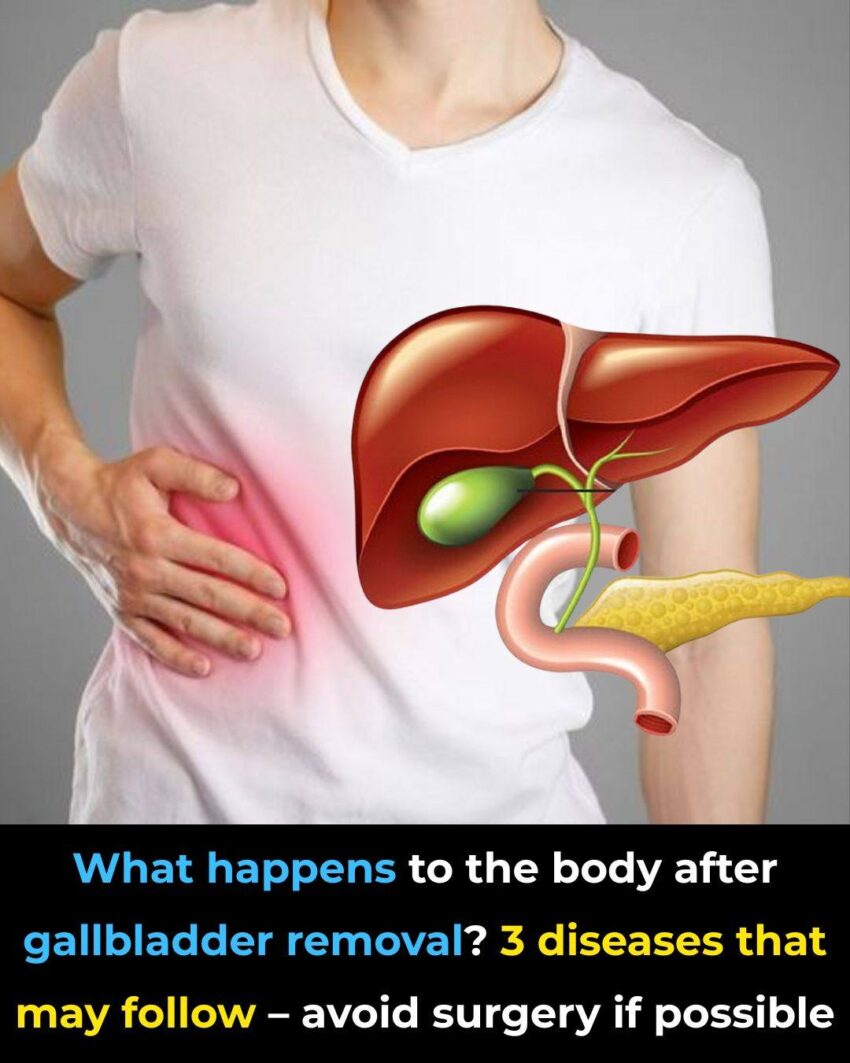
That headline is a bit misleading. Gallbladder removal (cholecystectomy) is one of the most common surgeries worldwide and is generally very safe. For many people with painful gallstones or complications, surgery is the best and sometimes only effective treatment.
Here’s what actually happens in the body after gallbladder removal — and what can happen in some people.
🧠 What the Gallbladder Does
The gallbladder stores bile made by the liver and releases it in larger amounts after you eat fatty food.
After removal:
- The liver still makes bile.
- Bile flows directly into the small intestine continuously instead of being stored.
Most people digest food normally after recovery.
What Can Happen After Gallbladder Removal?
1️⃣ Digestive Changes (Most Common)
Some people experience:
- Diarrhea
- Bloating
- Gas
- Fat intolerance
This happens because bile flows continuously instead of being released in a controlled way.
For most people, this improves within weeks to months.
2️⃣ Bile Acid Diarrhea
In a small percentage of patients, excess bile reaching the colon causes chronic diarrhea.
This is treatable with medication (bile acid binders).
3️⃣ Post-Cholecystectomy Syndrome
A small number of people continue to have abdominal pain or indigestion.
Sometimes the cause is:
- Retained stones
- Sphincter of Oddi dysfunction
- Another digestive condition that was already present
What About “3 Diseases That May Follow”?
There is no strong evidence that gallbladder removal directly causes major diseases in most people.
Some studies suggest a slightly increased long-term risk of:
- Acid reflux
- Changes in gut microbiome
- Fatty liver (mainly related to diet and metabolic health, not surgery alone)
But these are not guaranteed outcomes and often relate more to underlying lifestyle or metabolic factors.
Should Surgery Be Avoided?
It depends on the situation.
Surgery is usually recommended if you have:
- Recurrent painful gallstones
- Gallbladder infection (cholecystitis)
- Pancreatitis from gallstones
- Blocked bile ducts
In these cases, avoiding surgery can actually be dangerous.
Surgery may not be urgent if:
- You have silent gallstones (no symptoms)
- Mild, occasional discomfort
A doctor evaluates severity, risk, and overall health.
How to Support Your Body After Gallbladder Removal
✔ Eat smaller, more frequent meals
✔ Limit very high-fat foods at first
✔ Increase fiber gradually
✔ Stay physically active
✔ Maintain healthy weight
Most people live completely normal lives without a gallbladder.
If you’d like, tell me:
- Are you considering surgery?
- Do you currently have gallstones?
- Are you having pain after meals?
I can explain what’s typical and what doctors usually recommend based on your situation.
