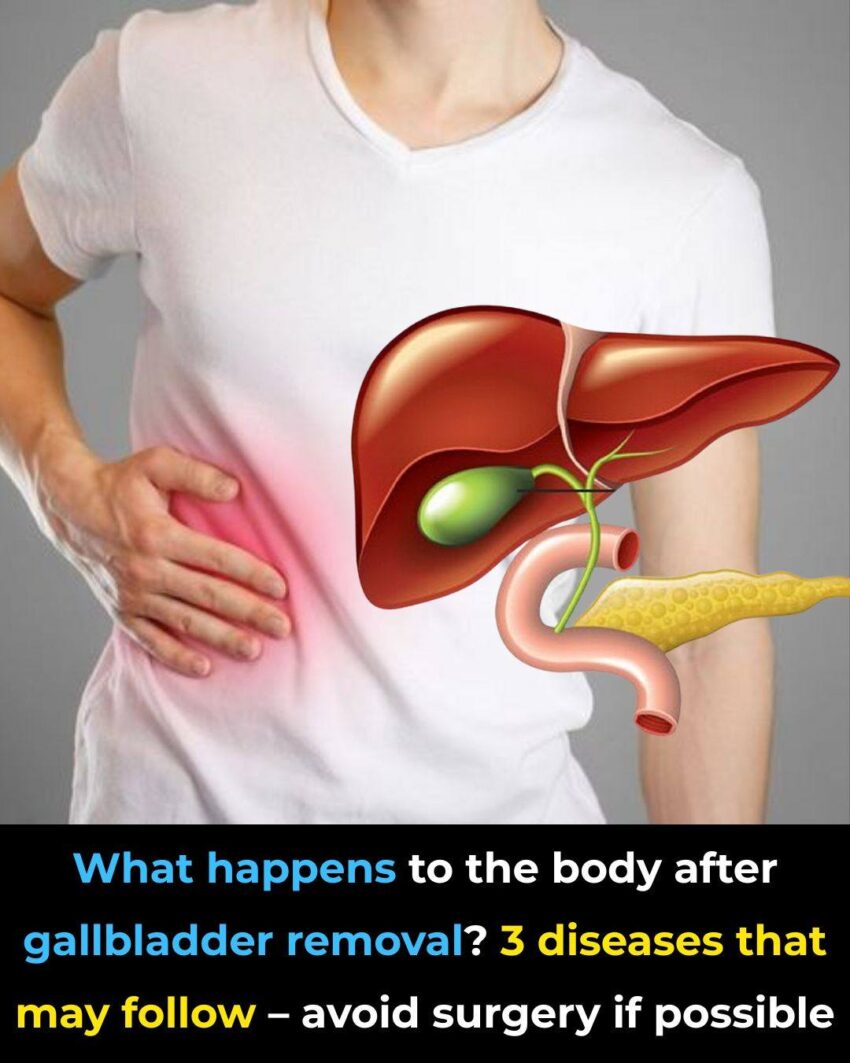
Here’s a careful, evidence-based explanation. Gallbladder removal (cholecystectomy) is very common and generally safe, but it does cause changes in digestion and can increase the risk of some conditions in certain people. Let’s break it down.
🧠 What Happens to the Body After Gallbladder Removal
1️⃣ Continuous Bile Flow
- The gallbladder normally stores and releases bile in bursts to digest fat.
- After removal, bile flows continuously from the liver into the small intestine.
- Most people digest fat normally, but some notice:
- Diarrhea or loose stools
- Gas, bloating, or mild indigestion
- Fat intolerance
2️⃣ Slightly Altered Digestion
- Fat-soluble vitamin absorption (A, D, E, K) can be slightly reduced in some cases.
- Most people adjust over weeks to months, and dietary changes (smaller, more frequent meals) help.
⚠️ Conditions That May Develop After Gallbladder Removal
- Postcholecystectomy Syndrome (PCS)
- Symptoms: Abdominal pain, bloating, nausea, diarrhea
- Cause: Changes in bile flow, small bile duct stones, or digestive system adjustment
- Occurs in a small percentage of patients
- Bile Acid Diarrhea
- Continuous bile entering the intestine can irritate the colon.
- Symptoms: Chronic diarrhea, urgency
- Treatable with medications called bile acid binders
- Increased Risk of Fatty Liver
- Studies suggest gallbladder removal may slightly increase fat accumulation in the liver, especially if combined with poor diet, obesity, or metabolic syndrome.
Note: Surgery itself doesn’t directly cause heart disease or diabetes — these are lifestyle-related risks.
💡 Tips to Minimize Post-Surgery Issues
- Eat smaller, lower-fat meals initially
- Focus on fiber-rich foods to regulate bowel movements
- Stay hydrated and active
- Monitor for ongoing digestive symptoms and consult your doctor if persistent
- Maintain a healthy weight and avoid processed, greasy foods
⚖️ Should You Avoid Surgery?
- Yes, if you have silent gallstones or minor, infrequent symptoms — often managed with diet and monitoring.
- No, if you have recurrent gallstone attacks, pancreatitis, infection, or blocked ducts — avoiding surgery could be dangerous.
Most people live normal, healthy lives without a gallbladder; complications are relatively uncommon and often manageable with diet or medication.
If you want, I can make a practical 1-month “post-gallbladder diet & routine” that minimizes digestive issues and risk of diarrhea or fatty liver. This is what doctors often recommend.
Do you want me to do that?
