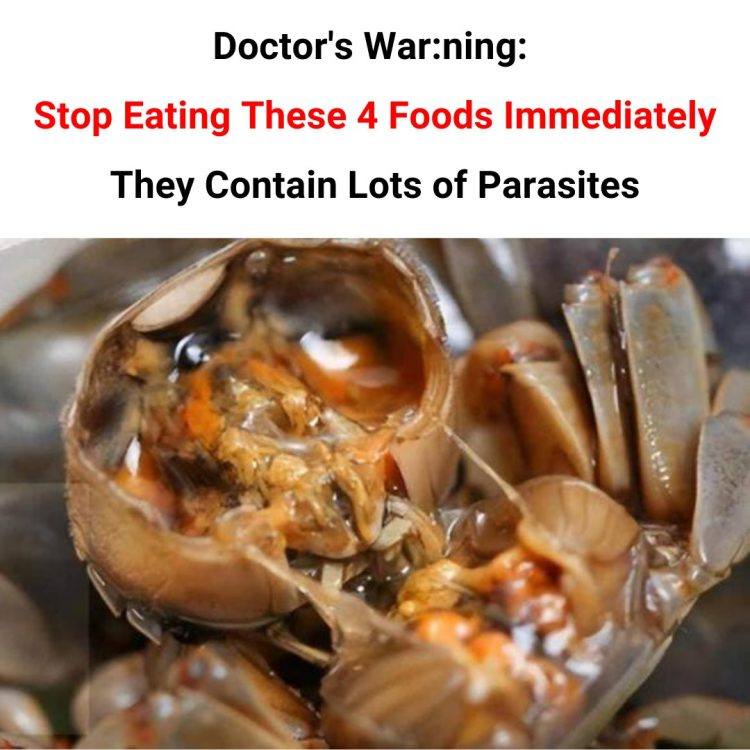
There are real facts about parasites in food — but the viral claim “doctors warn to immediately stop eating 4 foods because they contain a lot of parasites” is exaggerated and misleading as a blanket statement. What’s true is that certain foods can carry parasites if they’re raw, undercooked, contaminated, or not handled safely — but that doesn’t mean everyday eating of them is inherently poisonous or unsafe for everyone. (The Environmental Literacy Council)
Here’s a clearer, fact-based breakdown:
🧠 What Real Experts Say About Parasites in Food
🍣 Raw or Undercooked Fish
- Parasites like Anisakis or tapeworms can be present in fish that’s not properly frozen/cooked.
- Sushi and sashimi can carry risks if standards aren’t followed (freezing kills most parasites). (Wikipedia)
🐄 Undercooked Meat (Beef, Pork, Game)
- Certain parasites historically linked to undercooked meat include tapeworm and Trichinella species.
- Proper cooking to safe internal temperatures effectively kills these organisms. (The Environmental Literacy Council)
🥬 Unwashed Produce
- Fruits and vegetables can harbor parasite eggs or cysts if they were contaminated in soil or water.
- Washing produce thoroughly significantly reduces this risk. (Organize for Living)
🦪 Raw Shellfish
- Oysters, clams, and other shellfish filter water and can accumulate parasites or other pathogens that cause illness. Thorough cooking is key. (Organize for Living)
❗ What the Viral “4 Foods” Claim Misses
🔹 It’s not true that these foods are “full of parasites” just by eating them normally.
🔹 Parasites are generally only a concern when foods are raw, undercooked, or contaminated — not when handled safely.
🔹 Many traditional dishes (like sushi) have strict food safety steps (like freezing) that kill parasites before eating. (Wikipedia)
🦠 How To Safely Reduce Parasite Risk
✅ Cook meat and fish to recommended temperatures
✅ Freeze fish for sushi according to food-safety guidelines
✅ Wash produce thoroughly under running water
✅ Buy food from reputable, clean sources
✅ Avoid raw milk and unpasteurized products in risky settings
These steps dramatically cut your chances of parasitic infection — and that’s why food safety experts emphasize cooking and hygiene. (CDC)
🧾 Bottom Line
The idea that you must immediately stop eating certain everyday foods completely because they “contain a lot of parasites” isn’t scientifically accurate. What does matter is how foods are prepared and handled, because proper cooking and hygiene prevent nearly all parasitic risks.
If you want, I can share safe cooking temperature guidelines and best practices for meats and fish most often associated with parasites — that’s the best way to protect yourself.
