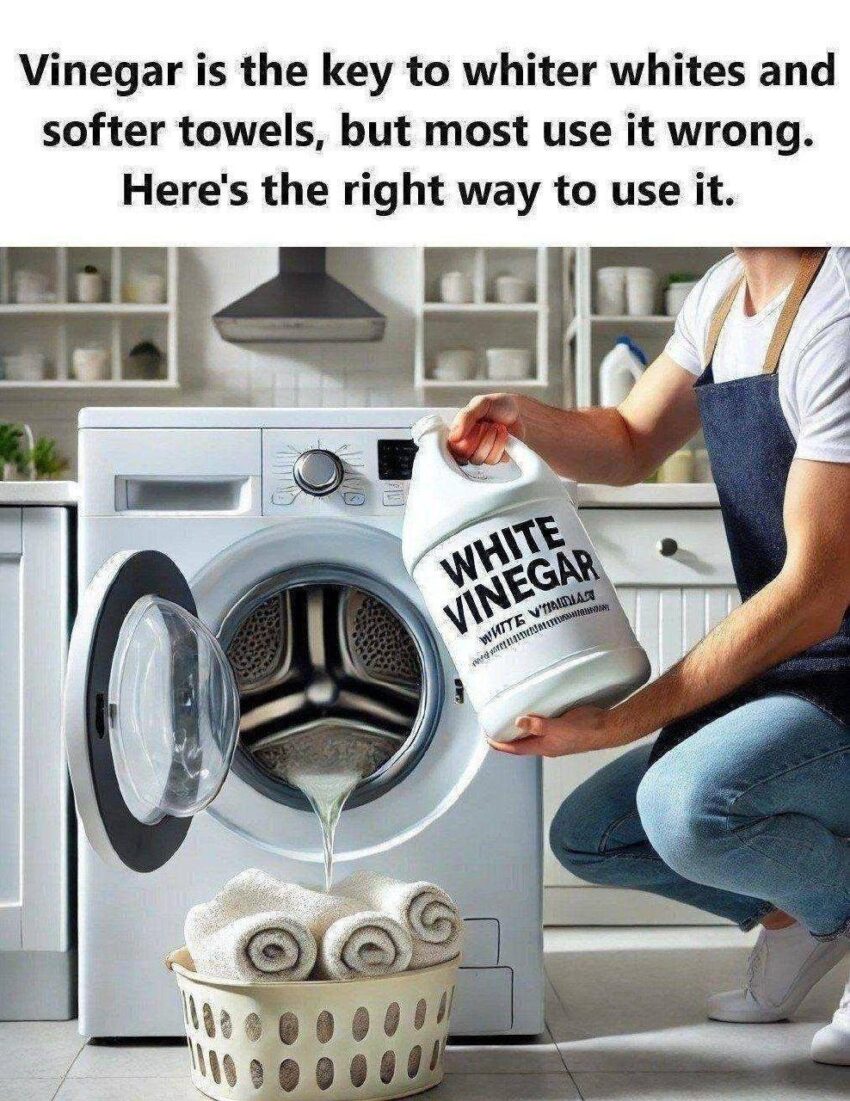
Vinegar can help with laundry — but it’s not a miracle product, and using it the wrong way can reduce effectiveness (or damage your machine).
Here’s the right way to use it safely and effectively 🧺✨
🧴 Why Vinegar Works
White distilled vinegar (5% acetic acid) helps:
- Break down detergent residue
- Dissolve mineral buildup (hard water)
- Reduce odors
- Soften fabrics naturally
It does not bleach fabric like chlorine bleach — but it can make whites appear brighter by removing dulling residue.
✅ How to Use Vinegar for Whiter Whites
✔ Add to the Rinse Cycle
- Use ½ to 1 cup white distilled vinegar
- Pour into the fabric softener dispenser (never directly on clothes)
- Run as usual
This removes detergent buildup that can make whites look gray.
💡 Works especially well if you use too much detergent.
✅ How to Make Towels Softer
If towels feel stiff:
- Wash normally (no fabric softener).
- Add 1 cup vinegar to the rinse cycle.
- Dry thoroughly.
Vinegar removes soap and mineral residue that causes stiffness.
❌ What NOT to Do
🚫 Don’t mix vinegar with bleach (dangerous fumes).
🚫 Don’t pour it directly on clothes.
🚫 Don’t use it every single wash (can wear down rubber seals over time).
🚫 Don’t expect it to replace heavy-duty stain remover.
⚠️ Front-Load Washer Note
Occasional use is fine, but frequent high-acid use may degrade rubber seals over time. Once every few weeks is generally safe.
✨ Extra Tip for Very Dingy Whites
For deep brightening:
- Soak whites in hot water + 1 cup vinegar for 1 hour before washing.
- Then wash normally with detergent.
Bottom Line
Vinegar works best in the rinse cycle, not the wash cycle.
It removes buildup — it doesn’t “bleach” fabric.
If you tell me whether you have hard water or soft water, I can adjust the method for your situation.
