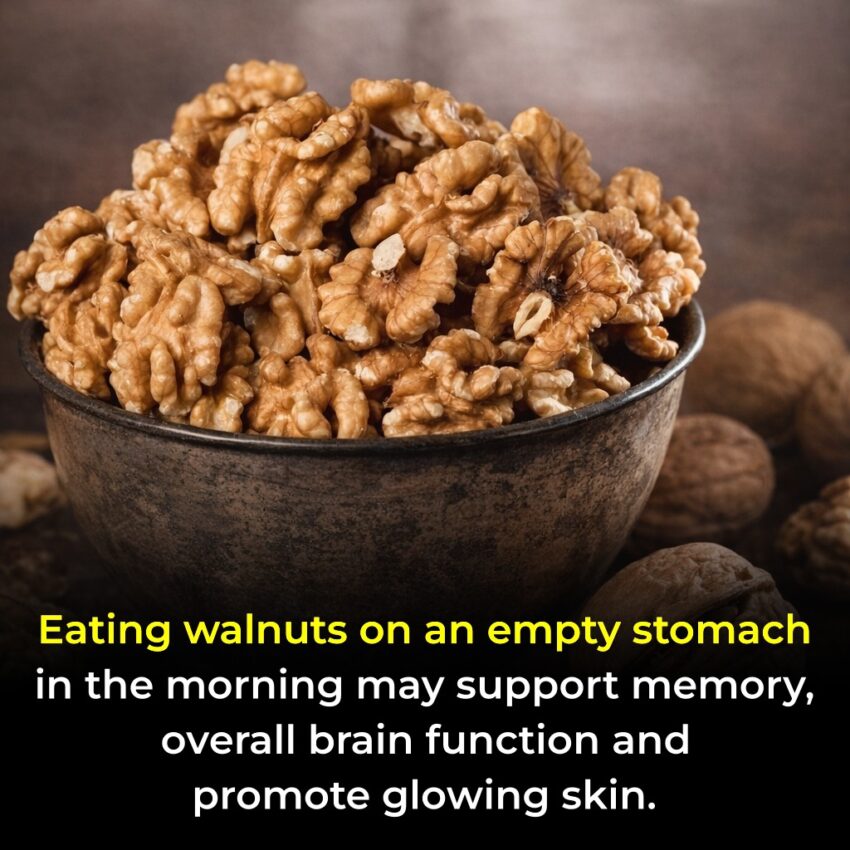
That statement is actually much closer to reality than most viral health claims — but it still needs context.
Walnuts aren’t magic, but they are one of the most studied nuts for both brain and heart health.
🧠 Why Walnuts May Support Brain Health
Walnuts contain:
- Omega-3 fatty acids (ALA) – support brain cell membranes
- Polyphenols – antioxidants that reduce oxidative stress
- Vitamin E – protects cells from damage
Some observational studies suggest regular nut consumption is associated with:
- Better cognitive performance
- Lower risk of cognitive decline
Important:
Walnuts support brain health over time — they don’t instantly improve memory or “boost IQ.”
❤️ Why Walnuts Help the Heart
Strong evidence shows walnuts can:
✔ Lower LDL (“bad”) cholesterol
✔ Improve blood vessel function
✔ Reduce inflammation
✔ Improve lipid profiles
They are a key part of heart-healthy eating patterns like the Mediterranean-style diet.
🌅 Why “In the Morning”?
There’s nothing magical about morning specifically.
But eating them in the morning may:
- Help control appetite
- Reduce blood sugar spikes when paired with carbs
- Improve satiety for the day
The benefit comes from consistent intake, not the time of day.
🥣 How Much Is Beneficial?
Research typically uses:
- About 1 ounce (28 grams) per day
(roughly a small handful, 7–14 walnut halves)
More isn’t necessarily better — they are calorie-dense.
⚠️ Keep in Mind
- Salted or sugar-coated walnuts reduce benefits
- If you have nut allergies, avoid them
- They complement — not replace — medical treatment
Bottom Line
✔ Yes, walnuts can support brain and heart health
❌ No, they are not a miracle cure
If you’d like, I can also suggest:
- A simple brain-healthy breakfast using walnuts
- Or a heart-focused daily eating plan that includes them
Just tell me your goal 😊
