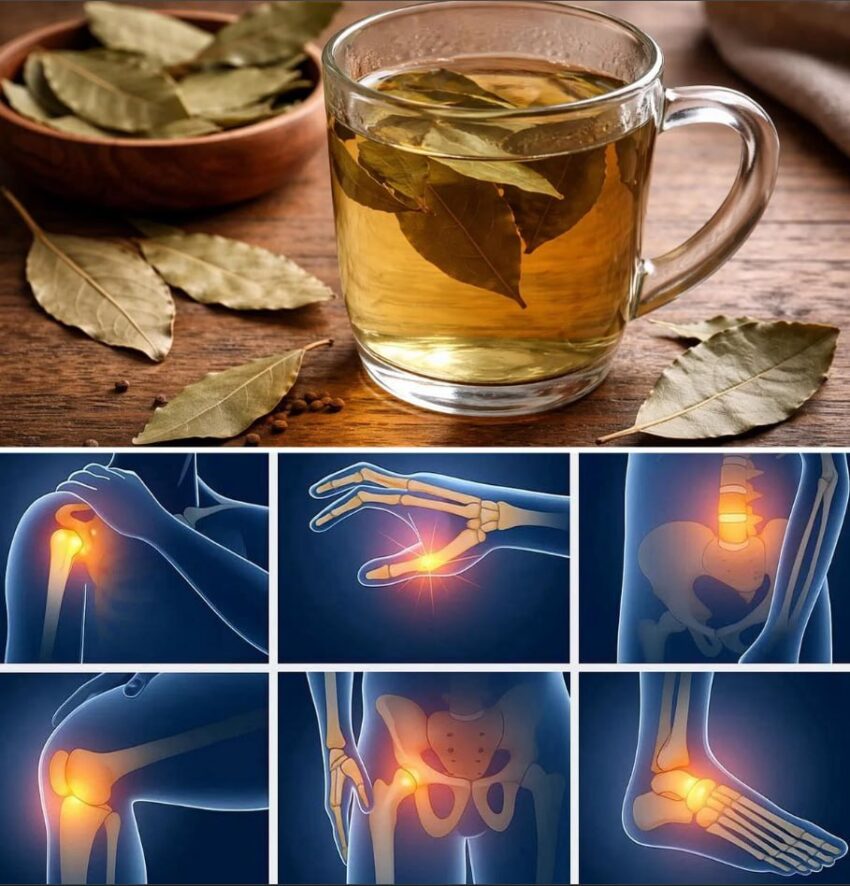
Bay leaf tea is a traditional home remedy sometimes used for joint, muscle, and rheumatic pain because bay leaves contain anti-inflammatory compounds. While it’s not a replacement for medical treatment, some people find it soothing.
The plant typically used is Laurus nobilis (true bay leaf — not ornamental varieties, which can be toxic).
How to Make Bay Leaf Tea
Ingredients
- 3–5 dried bay leaves
- 2 cups (500 ml) water
Instructions
- Bring water to a boil.
- Add the bay leaves.
- Reduce heat and simmer for 10 minutes.
- Turn off heat and let steep another 5–10 minutes.
- Strain and drink warm.
You can add lemon or a small amount of honey for taste.
How It May Help
Bay leaves contain:
- Eugenol – anti-inflammatory properties
- Antioxidants – may reduce oxidative stress
- Mild analgesic (pain-relieving) effects
Warm herbal tea can also promote circulation and relaxation, which may ease stiffness.
How Often?
- 1 cup once daily
- Try for 5–7 days, then take a break
Do not overuse — large amounts may cause stomach irritation.
Important Safety Notes
Avoid or speak to a doctor first if you:
- Are pregnant or breastfeeding
- Take blood thinners
- Have diabetes (may affect blood sugar)
- Have kidney problems
Bay leaves should always be strained out — don’t swallow whole leaves, as they can be sharp.
If you’re dealing with ongoing rheumatic pain, I can also suggest evidence-based options (diet, supplements, exercises) depending on whether it’s osteoarthritis, rheumatoid arthritis, or general muscle pain.
