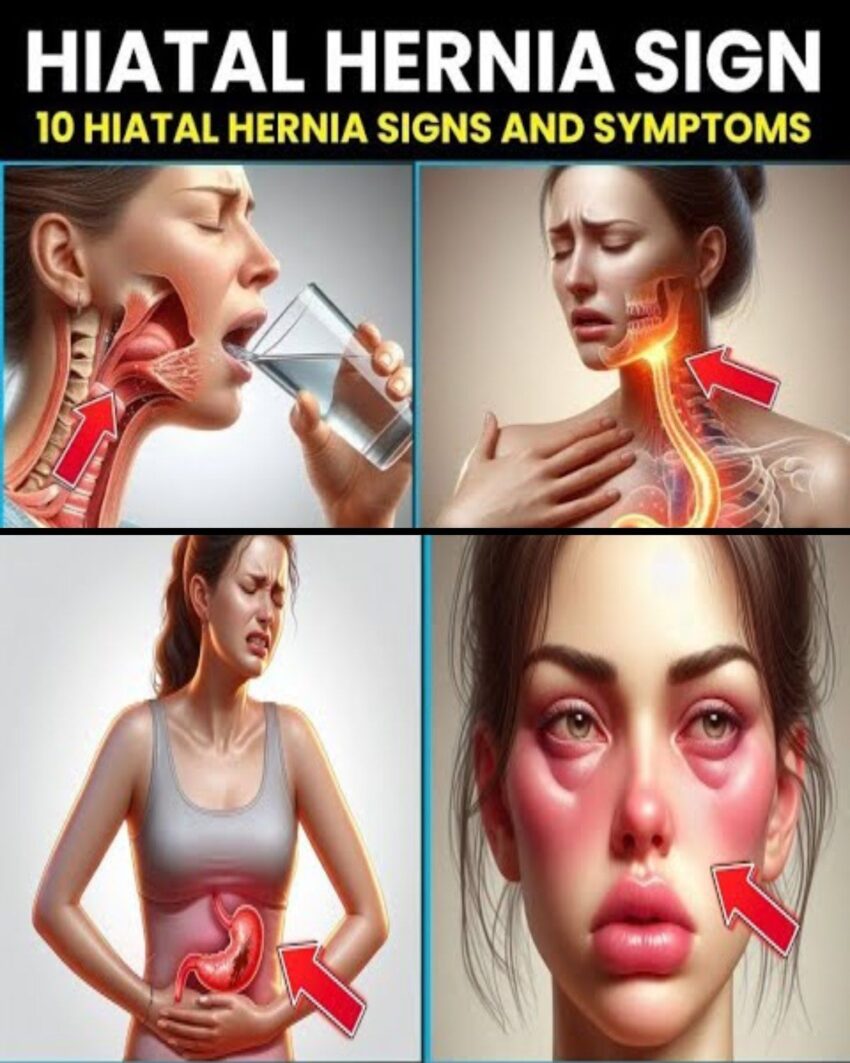
A hiatal hernia happens when part of the stomach pushes up through the diaphragm into the chest cavity. Many people don’t realize they have one — but when symptoms show up, they’re often related to acid reflux.
Here are 10 signs and symptoms you should know:
1. Frequent Heartburn
A burning sensation in the chest, especially after eating or when lying down.
2. Acid Reflux
Stomach acid backing up into the throat (GERD-like symptoms).
3. Chest Pain
Can feel sharp or burning. Always rule out heart-related causes first.
4. Difficulty Swallowing (Dysphagia)
A sensation of food “sticking” in the chest.
5. Regurgitation
Food or sour liquid coming back up into the mouth.
6. Chronic Cough
Especially worse at night due to acid irritation.
7. Hoarseness or Sore Throat
From stomach acid irritating the vocal cords.
8. Bloating or Feeling Full Quickly
Pressure in the upper abdomen or chest.
9. Shortness of Breath
Large hernias can press against the lungs.
10. Nausea or Vomiting
More common with larger or complicated hernias.
When to Seek Immediate Medical Care
Call emergency services if you experience:
- Severe chest pain
- Sudden difficulty swallowing
- Vomiting blood
- Black, tarry stools
These could indicate complications such as strangulation or bleeding.
Important to Know
Many hiatal hernias are small and symptom-free. Lifestyle changes often help:
- Eat smaller meals
- Avoid lying down after eating
- Elevate the head of your bed
- Reduce acidic/spicy foods
- Maintain a healthy weight
If symptoms are frequent, a doctor may recommend medications like antacids, H2 blockers, or proton pump inhibitors.
If you’d like, I can also explain the difference between sliding and paraesophageal hiatal hernias.
