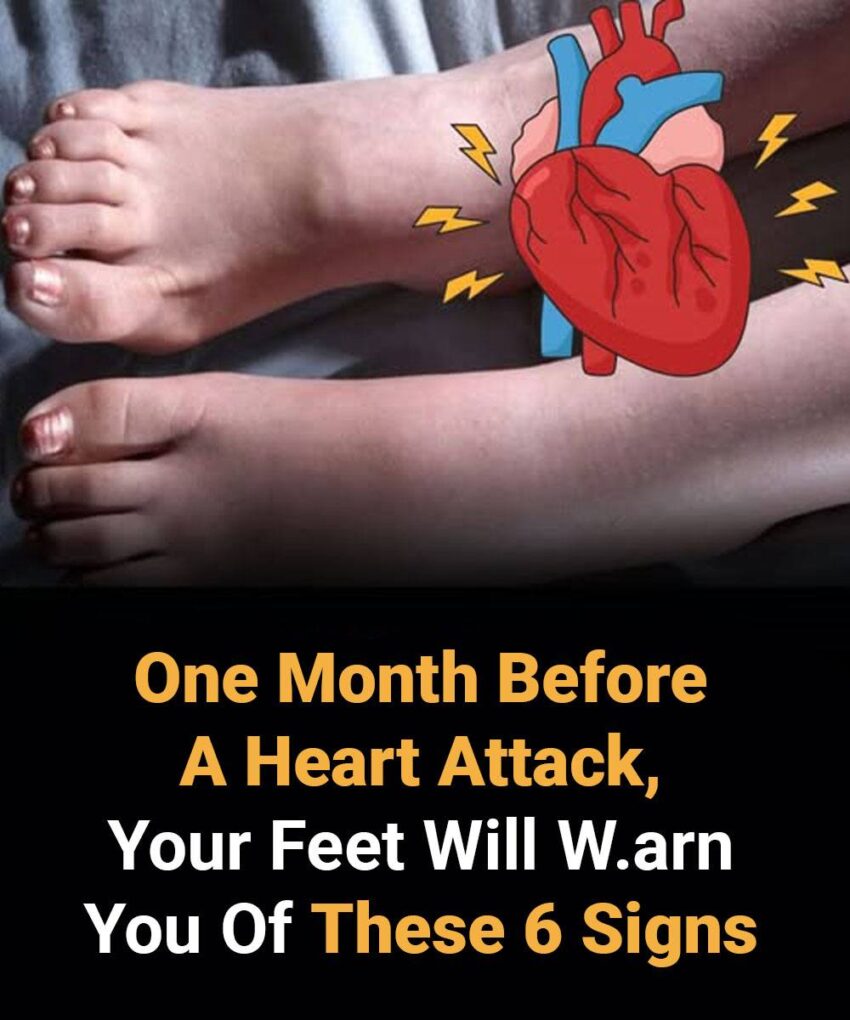
That headline is misleading.
Your feet do not reliably “warn” you one month before a heart attack.
A heart attack (myocardial infarction) usually happens when a coronary artery becomes suddenly blocked — often without a predictable 30-day foot warning.
However, certain foot and leg symptoms can signal heart or circulation problems, which increase heart attack risk. Here’s what’s real:
1️⃣ Swelling in the Feet & Ankles (Edema)
May indicate:
- Heart failure
- Poor circulation
- Kidney problems
If swelling is new, persistent, and comes with shortness of breath — get checked.
2️⃣ Cold Feet
Could suggest:
- Peripheral artery disease (PAD)
- Reduced blood flow
PAD shares risk factors with heart disease.
3️⃣ Numbness or Weak Pulses in Feet
May indicate circulation problems, especially in smokers or people with diabetes.
4️⃣ Shiny Skin or Hair Loss on Legs
Can be a sign of poor blood flow (PAD).
5️⃣ Slow-Healing Wounds on Feet
Common in diabetes and vascular disease — both major heart attack risk factors.
6️⃣ Bluish or Pale Toes
May signal compromised blood flow and should be evaluated.
⚠️ Important Reality Check
A heart attack’s true early warning signs (when they happen) usually involve:
- Chest pressure or tightness
- Pain spreading to arm, jaw, or back
- Shortness of breath
- Nausea
- Cold sweats
Women may have more subtle symptoms like:
- Fatigue
- Indigestion-like discomfort
- Upper back pain
🚨 Call Emergency Services Immediately If:
- Chest pressure lasts more than a few minutes
- Symptoms come and go
- You feel faint or severely short of breath
Do not wait for foot signs.
Bottom Line
Feet don’t predict heart attacks one month in advance — but circulation changes in the feet can signal underlying cardiovascular disease.
If you’re worried, I can also share a simple at-home checklist to assess your heart risk factors safely.
