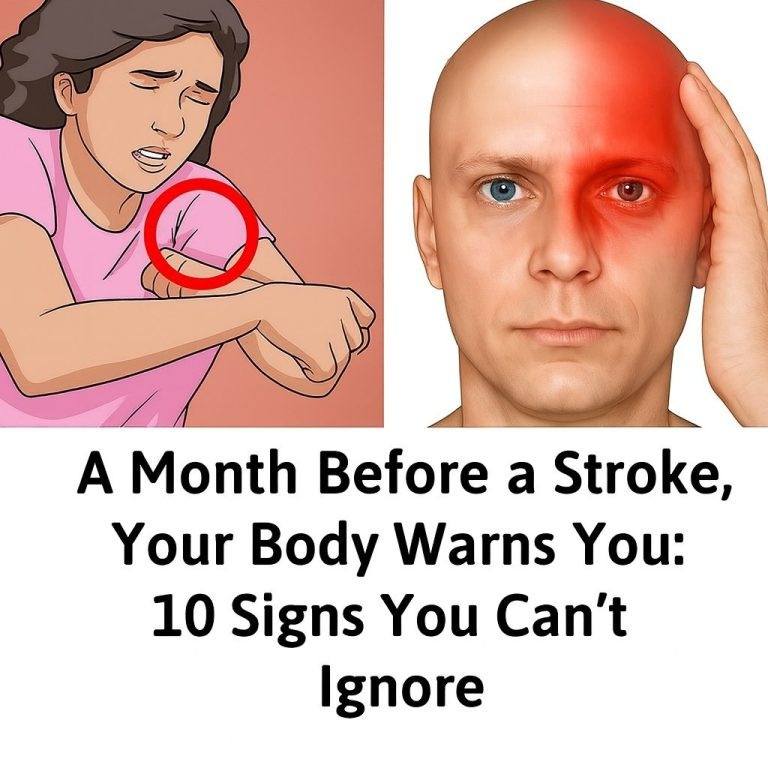
A stroke often happens suddenly, but there can be warning events—most importantly a mini-stroke, known as a Transient Ischemic Attack.
What actually happens before a stroke
- Some people have a TIA days or weeks beforehand.
- A TIA causes stroke-like symptoms that go away quickly (minutes to hours).
- It’s a medical emergency warning, not something to ignore.
🚨 Real warning signs (can happen suddenly)
Doctors use the FAST rule:
- F – Face drooping (one side looks uneven)
- A – Arm weakness (can’t raise one arm)
- S – Speech difficulty (slurred or strange speech)
- T – Time to call emergency services immediately
Other serious symptoms
These can appear suddenly (with stroke or TIA):
- Sudden numbness or weakness (face, arm, or leg—especially one side)
- Confusion or trouble understanding
- Vision problems in one or both eyes
- Trouble walking, dizziness, loss of balance
- Severe headache with no clear cause
⚠️ About those “10 signs a month before” posts
- There is no reliable medical list of 10 specific early warning signs a month ahead
- Many viral lists include vague things like fatigue or neck pain—these are not specific to stroke
- Relying on them can delay real treatment
What you should take seriously
- Any sudden neurological symptom, even if it disappears
- Possible TIA — this greatly increases stroke risk in the next days/weeks
- Risk factors like high blood pressure, smoking, diabetes, high cholesterol
Bottom line
A stroke usually doesn’t give a long checklist in advance—but your body can give urgent, short-term warnings. If you notice any FAST symptoms or something feels suddenly “off,” seek medical help immediately.
If you want, I can walk you through how to reduce your stroke risk based on your lifestyle.
