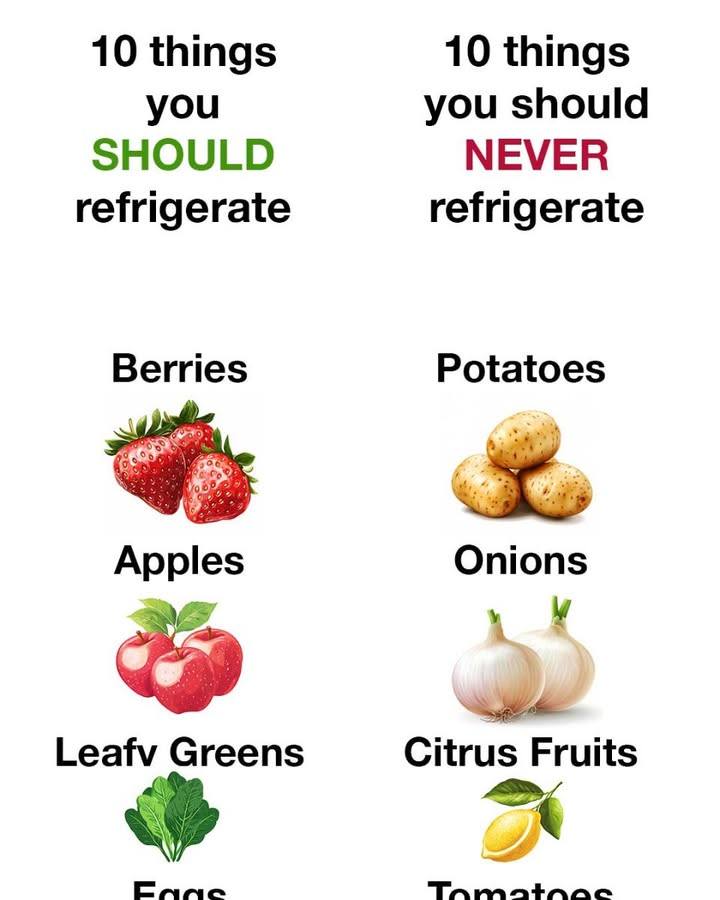
Great topic — storing food properly saves money, preserves flavor, and prevents spoilage. Here’s a practical guide:
❄️ 10 Things You Should Always Refrigerate
1️⃣ Milk & Dairy Products
- Milk, yogurt, sour cream, cream cheese
2️⃣ Eggs
- In the U.S. and some countries, eggs should be refrigerated for safety.
3️⃣ Raw Meat & Poultry
- Beef, chicken, pork, turkey
4️⃣ Seafood
- Fresh fish and shellfish (use quickly)
5️⃣ Cooked Leftovers
- Store within 2 hours of cooking
6️⃣ Deli Meats
- Even unopened packages
7️⃣ Soft Cheeses
- Brie, mozzarella, ricotta
8️⃣ Cut Fruits & Vegetables
- Once sliced, they must be refrigerated
9️⃣ Berries
- Strawberries, blueberries, raspberries
🔟 Nut Butters (Natural/No Preservatives)
- Especially those without stabilizers
🚫 10 Things You Should Never Refrigerate
1️⃣ Tomatoes
- Cold temperatures ruin texture and flavor
2️⃣ Potatoes
- Fridge converts starch to sugar (affects taste and cooking)
3️⃣ Onions (Whole)
- Store in a cool, dry, ventilated place
4️⃣ Garlic
- Can sprout and turn rubbery in the fridge
5️⃣ Bananas
- Cold air stops ripening and darkens peel
6️⃣ Bread
- Refrigeration makes it stale faster
7️⃣ Honey
- Will crystallize quickly
8️⃣ Coffee
- Absorbs fridge odors and moisture
9️⃣ Avocados (Unripe)
- Keep at room temp until ripe
🔟 Hot Sauce (Most Types)
- High vinegar content preserves it safely at room temp
💡 Bonus Tip
When in doubt:
- High moisture + protein = refrigerate
- Whole produce with protective skins = usually room temp
If you want, I can also make a printable fridge storage cheat sheet with ideal temperatures and shelf life.
