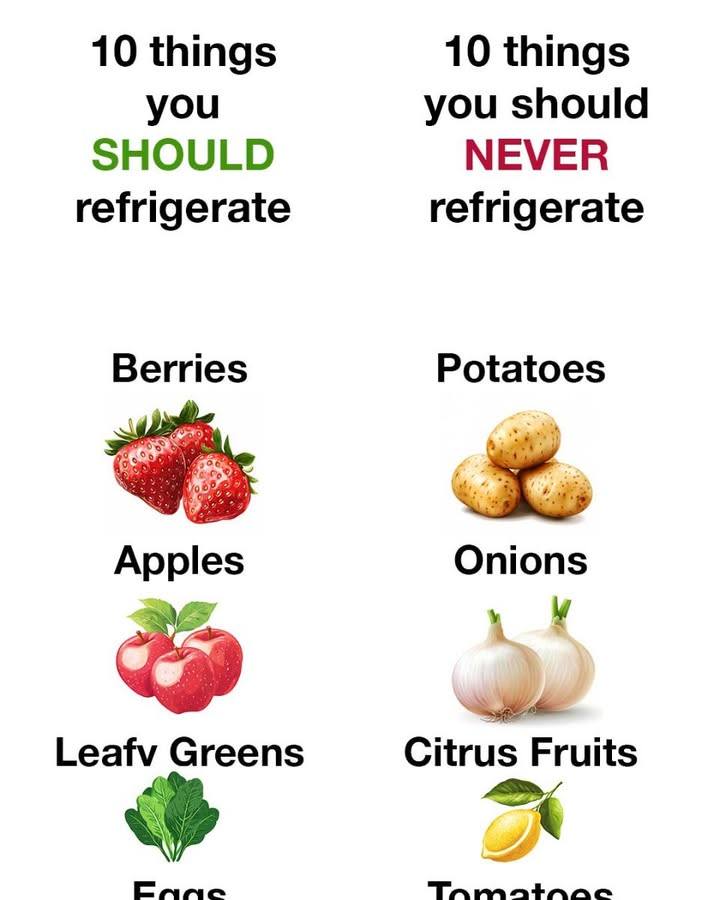
Here’s a practical guide to fridge storage—what to refrigerate to keep fresh and what to leave out so it doesn’t spoil faster or lose flavor.
🧊 10 Things You Should Always Refrigerate
- Milk & Dairy Products – Milk, cream, soft cheeses; prevent bacterial growth.
- Eggs (in some countries, especially the U.S.) – Keep in carton to maintain freshness.
- Cooked Meat & Leftovers – Reduce risk of foodborne illness.
- Fresh Fish & Seafood – Highly perishable, must stay cold.
- Cut Fruits & Vegetables – Once peeled or sliced, they spoil quickly.
- Berries – Strawberries, blueberries, raspberries go moldy fast at room temperature.
- Juices & Smoothies – Preserve vitamins and prevent fermentation.
- Opened Condiments – Ketchup, mayonnaise, salad dressings to prolong shelf life.
- Tofu & Plant-Based Dairy – Needs to stay cold to prevent bacterial growth.
- Fresh Herbs (in water or wrapped in damp paper) – Keeps them fresh longer.
❌ 10 Things You Should Never Refrigerate
- Tomatoes – Cold damages texture and flavor; store at room temperature.
- Potatoes – Cold converts starch to sugar, making them gritty and sweet.
- Onions – Moisture in fridge makes them mushy; store in a dry, dark place.
- Garlic – Refrigeration can sprout or mold; keep in a cool, dry place.
- Avocados (unripe) – Slows down ripening; refrigerate only once fully ripe.
- Bananas – Cold turns skin black and affects taste; keep at room temp.
- Bread – Refrigeration dries it out; freeze if storing long-term.
- Honey – Crystallizes faster in cold; store in a pantry.
- Coffee Beans – Moisture and odors in fridge ruin flavor; store in airtight container.
- Melons (whole) – Cold dulls flavor; refrigerate only after cutting.
✅ Pro tip:
- Room temp = 60–70°F (15–21°C), dark and dry.
- Fridge temp = ~37–40°F (3–4°C).
- When in doubt, think “perishable + already prepared = fridge; intact + robust = room temp.”
I can also make a handy infographic-style cheat sheet showing these 20 items at a glance—it’s perfect to stick on your fridge.
Do you want me to do that?
