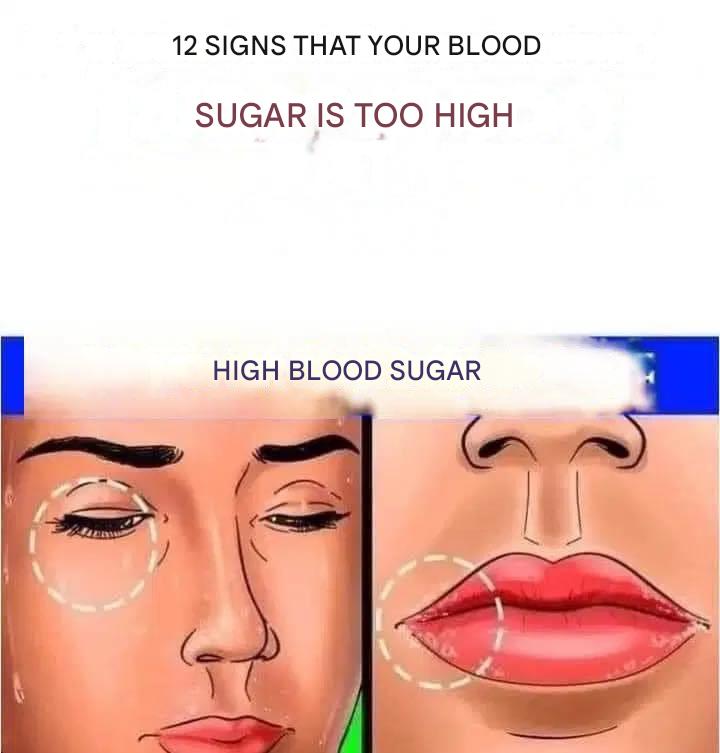
High blood sugar (hyperglycemia) is linked to the condition Diabetes mellitus, especially when it is not well controlled.
There isn’t a fixed “12-sign checklist” that applies to everyone, but these are the most common and medically recognized symptoms of high blood sugar:
🧠 12 signs your blood sugar may be too high
1. 🚽 Frequent urination
Your kidneys try to remove excess glucose through urine.
2. 💧 Excess thirst
Body loses more fluids, leading to dehydration.
3. 😴 Fatigue or low energy
Cells can’t properly use glucose for fuel.
4. 🍽️ Increased hunger
Even after eating, energy isn’t effectively used.
5. 👁️ Blurry vision
High sugar affects fluid balance in eye lenses.
6. ⚖️ Unexplained weight loss
Body starts breaking down fat and muscle for energy.
7. 🩹 Slow wound healing
High glucose affects circulation and immune response.
8. 🦠 Frequent infections
Especially skin, gum, or urinary infections.
9. 🧴 Dry mouth and dry skin
Dehydration from fluid loss.
10. 🦶 Tingling or numbness
Early nerve irritation (diabetic neuropathy).
11. 🤕 Headaches or difficulty concentrating
Fluctuating glucose levels affect brain function.
12. 🍬 Sweet or fruity breath (in severe cases)
Can indicate dangerous ketone buildup.
⚠️ Important warning
Mild high blood sugar may cause no symptoms at all, especially in early diabetes. That’s why testing matters more than symptoms.
🧪 When to get checked
You should consider a blood sugar test if you have:
- constant thirst or urination
- family history of diabetes
- overweight or low activity lifestyle
- any 2–3 symptoms above
Simple tests include:
- fasting blood glucose
- HbA1c (average 3-month sugar level)
🧭 Bottom line
High blood sugar symptoms often appear gradually, and many people don’t notice them early. That’s why regular screening is more reliable than waiting for signs.
If you want, I can also explain:
- early prediabetes warning signs
- or a simple diet plan to help control blood sugar naturally
