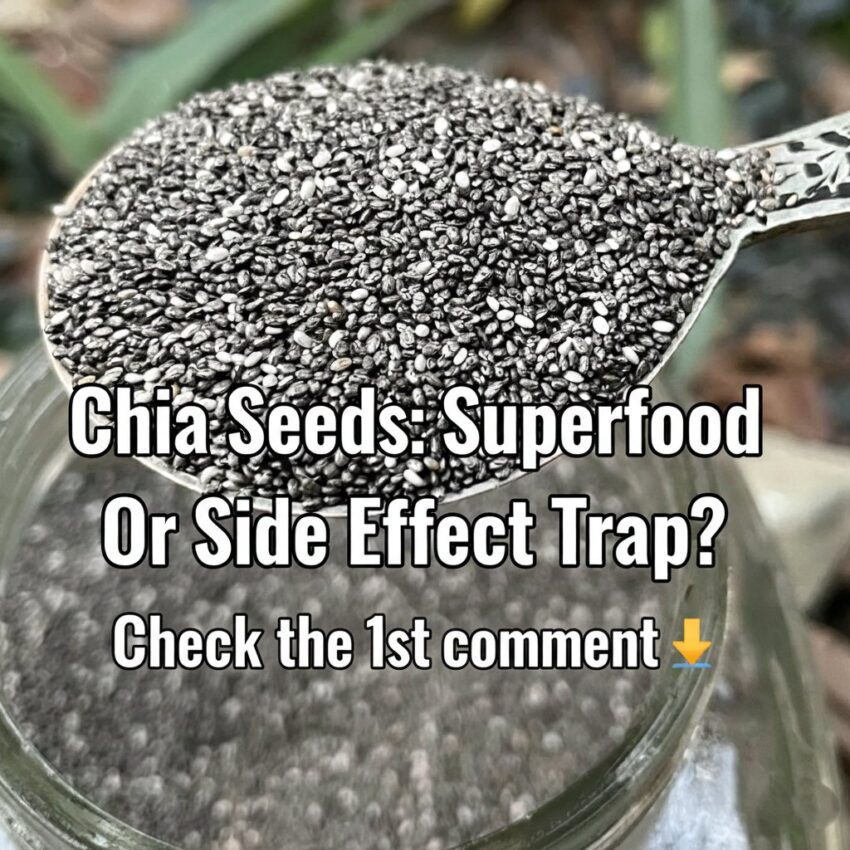
Chia seeds are widely praised as a superfood—but like any food, they can cause side effects in certain situations. Here are 6 chia seed side effects you should know about:
1. Digestive Issues (Bloating, Gas, Constipation)
Chia seeds are extremely high in fiber (about 10g per ounce). Eating too much—especially if you’re not used to high-fiber foods—can cause:
- Bloating
- Gas
- Stomach cramps
- Constipation (if not taken with enough water)
Tip: Start with 1 tablespoon per day and increase gradually while drinking plenty of water.
2. Choking Risk (If Eaten Dry)
Chia seeds can absorb up to 10–12 times their weight in water. If eaten dry and followed by liquids, they may swell in the throat and create a choking hazard.
There have been reported medical cases involving esophageal blockage after consuming dry chia seeds.
Tip: Always soak chia seeds before eating (10–15 minutes minimum) or mix them into moist foods like yogurt or oatmeal.
3. May Lower Blood Pressure Too Much
Chia seeds contain omega-3 fatty acids (especially alpha-linolenic acid), which can help lower blood pressure. While beneficial for many people, it could cause problems if you:
- Already have low blood pressure
- Take blood pressure medication
It may enhance the medication’s effect and lead to dizziness or lightheadedness.
4. Increased Bleeding Risk
The omega-3 content in chia seeds may have a mild blood-thinning effect. If you are taking:
- Blood thinners (e.g., warfarin)
- Aspirin regularly
- Anticoagulant medications
You should speak with your healthcare provider before consuming large amounts.
5. Allergic Reactions (Rare but Possible)
Though uncommon, some people may experience:
- Skin rashes
- Hives
- Itching
- Swelling
- Difficulty breathing
People allergic to sesame or mustard seeds may have a higher risk of reacting to chia.
6. May Affect Blood Sugar Levels
Chia seeds can help lower blood sugar due to their fiber content. However, if you:
- Take insulin
- Use diabetes medications
They may enhance blood sugar-lowering effects, potentially leading to hypoglycemia.
How Much Is Safe?
For most healthy adults:
- 1–2 tablespoons (15–30 grams) per day is considered safe.
Moderation and proper hydration are key.
If you’d like, I can also share the benefits of chia seeds to balance things out.
