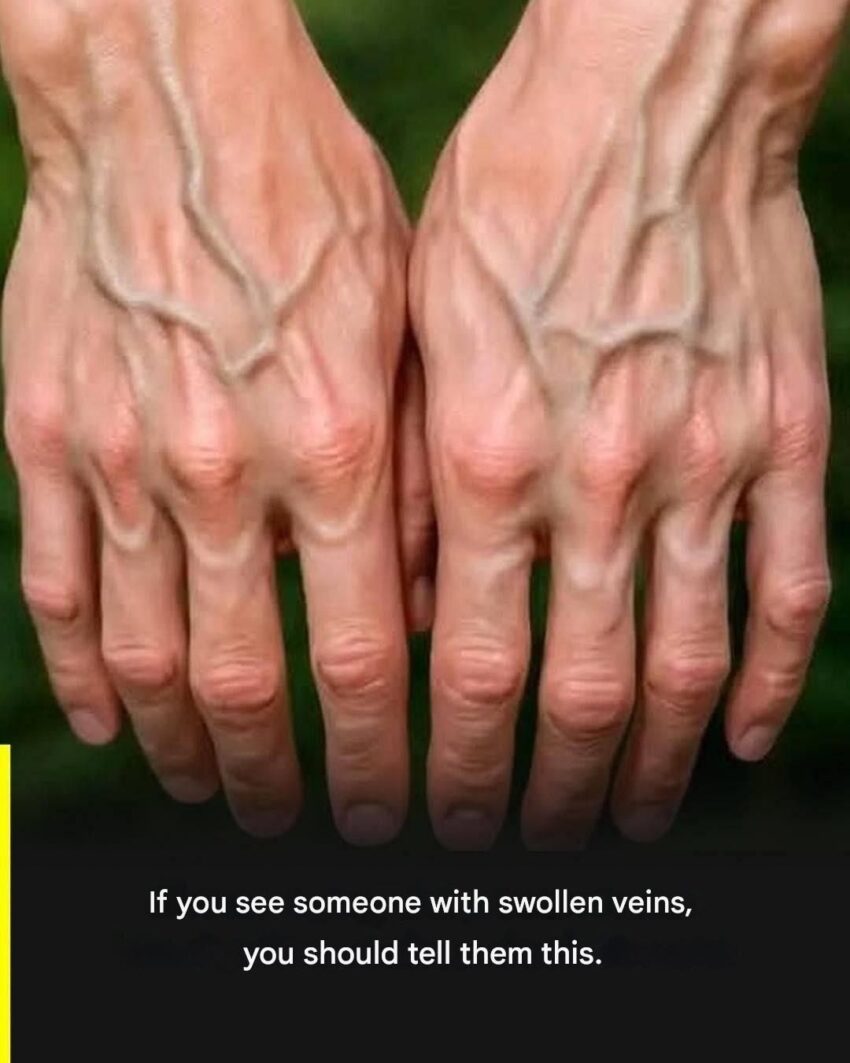
That statement is a bit too broad—“swollen veins” can mean very different things, and what you should tell someone depends on what you’re actually seeing.
🩸 What “swollen veins” might be
1. Normal visible veins (often harmless)
Some people naturally have more visible veins due to:
- low body fat
- exercise (“pumped” veins after activity)
- heat
- aging or thin skin
👉 No danger in most cases.
2. Varicose veins (more common concern)
These are enlarged, twisted veins—usually in legs.
They may be linked with:
- standing/sitting long hours
- genetics
- pregnancy
- aging
Symptoms can include:
- aching or heaviness in legs
- itching
- mild swelling
3. More serious (needs attention)
Sometimes swollen veins + other symptoms may indicate issues like:
- blood clot (deep vein thrombosis)
- inflammation of a vein
- circulation problems
🚨 Warning signs include:
- sudden one-leg swelling
- pain or warmth in the area
- redness
- shortness of breath (emergency)
🧭 What you should tell someone (safe and helpful)
Instead of a dramatic warning, a better, responsible message is:
“If your veins are newly swollen, painful, or only on one side, it’s worth getting checked by a doctor to rule out circulation problems. If they’re mild and long-term, it could just be varicose veins or normal visibility.”
⚠️ Important takeaway
Swollen veins are not automatically dangerous, but new or painful changes should not be ignored.
If you want, tell me what you saw (leg, arm, pain or not), and I can help you understand whether it sounds normal or something that needs medical attention.
