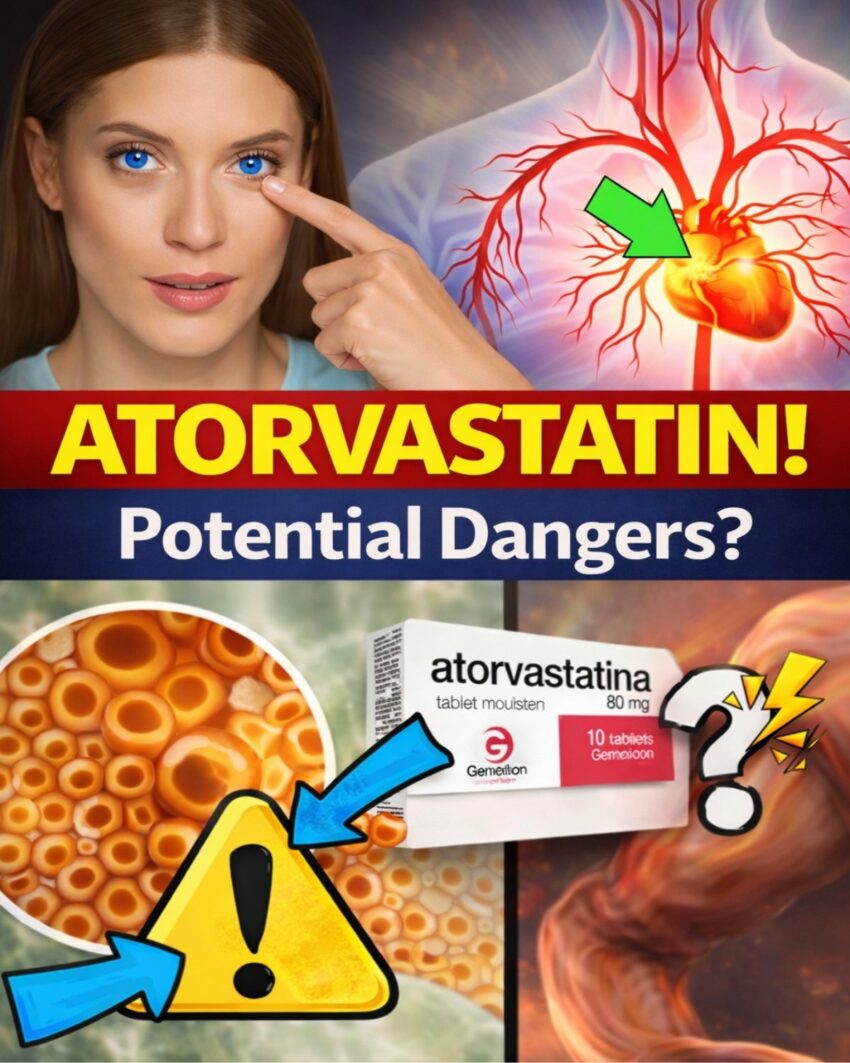
Atorvastatin (brand name often known as Lipitor) is widely used to lower cholesterol and reduce the risk of heart attack and stroke.
Headlines like “15 hidden dangers” are usually overstated. Most people take it safely, but it can have side effects, and it’s good to know what to watch for. 👇
⚠️ Possible Side Effects of Atorvastatin
🟡 Common (usually mild)
- Muscle aches or soreness
- Joint pain
- Headache
- Nausea or stomach upset
- Diarrhea or constipation
🟠 Less Common but Important
- Muscle weakness
- Fatigue or low energy
- Sleep problems
- Mild memory issues or confusion (rare, usually reversible)
🔴 Rare but Serious (seek medical help)
- Severe muscle damage (Rhabdomyolysis)
- Muscle pain + dark urine = urgent warning
- Liver problems
- Symptoms: yellowing of skin/eyes, dark urine
- Increased blood sugar
- May slightly raise risk of Type 2 Diabetes in some people
- Kidney complications (usually linked to severe muscle breakdown)
- Allergic reactions
- Rash, swelling, difficulty breathing
- Tendon issues (very rare)
🧠 What Many People Misunderstand
- Most “dangers” are rare or dose-related
- Millions take atorvastatin with no serious problems
- It significantly reduces risk of:
- Heart attack
- Stroke
- Complications from Atherosclerosis
⚠️ Who Should Be Extra Careful
- People with liver disease
- Heavy alcohol use
- Those taking multiple medications (risk of interactions)
- Older adults (higher sensitivity to muscle effects)
🚫 Important Safety Advice
- Don’t stop taking it suddenly without medical advice
- Report muscle pain, weakness, or unusual fatigue
- Get periodic blood tests if prescribed
✅ Bottom Line
Atorvastatin isn’t “dangerous” for most people—it’s one of the most studied and effective heart-protective drugs.
The key is monitoring and using the right dose, not avoiding it out of fear.
If you want, I can explain how to reduce side effects naturally while staying on atorvastatin (diet, timing, supplements that may help).
