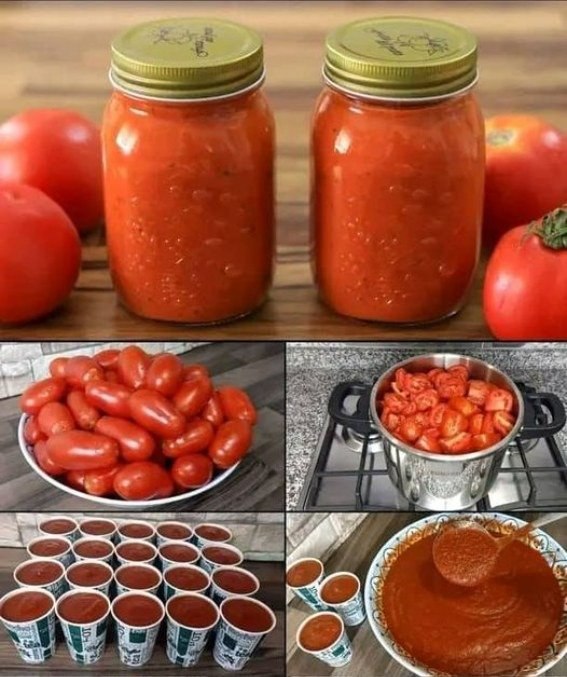
Storing fresh tomato paste for a full year without refrigeration is possible—but only if you use proper preservation methods. Anything else can spoil or become unsafe.
Here are the safe, traditional ways 👇
🍅 1. Oil-Sealed Method (Short–Medium Term)
How it works:
Oil blocks air and slows spoilage.
Steps:
- Cook tomato paste until very thick and reduced.
- Let it cool completely.
- Transfer into a clean, dry glass jar.
- Pour a layer of olive oil on top (completely covering the paste).
- Seal tightly and store in a cool, dark place.
⏳ Shelf life:
- Up to 2–3 months (not a full year)
⚠️ Must always keep paste covered with oil after each use.
☀️ 2. Sun-Dried Tomato Paste (Traditional Long Storage)
How it works:
Removing moisture prevents bacterial growth.
Steps:
- Spread thick tomato paste in a thin layer on a tray.
- Dry under strong sunlight for several days (cover with a mesh to protect from dust).
- Once fully dried and leathery, cut into pieces or grind into powder.
- Store in an airtight container.
⏳ Shelf life:
- 6–12 months without refrigeration
🔥 3. Proper Canning (Best for 1 Year Storage)
How it works:
Heat kills bacteria and creates a sealed environment.
Steps:
- Cook tomato paste well.
- Fill into sterilized glass jars.
- Add a little lemon juice or citric acid (for acidity).
- Seal and process jars in a boiling water bath for ~30–40 minutes.
- Let cool—lids should vacuum seal.
⏳ Shelf life:
- Up to 1 year (or more) at room temperature
⚠️ Important Safety Notes
- Tomatoes are acidic but still need proper handling
- Never store fresh paste at room temp without drying or canning
- If you see mold, bad smell, or gas buildup → throw it away
✅ Bottom line
👉 For a full year without refrigeration, your best option is:
✔️ Canning or
✔️ Fully drying the paste
If you want, I can give you a desi-style sun-drying method used in villages that works really well in hot climates 👍
