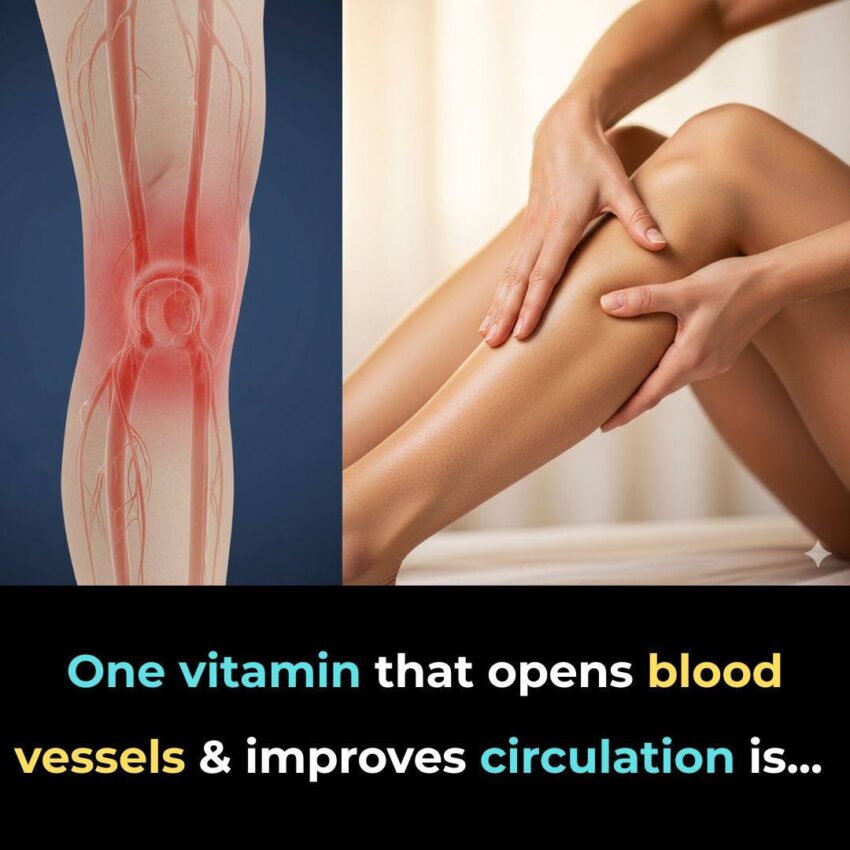
If you’re seeing claims like “one vitamin that opens blood vessels and improves circulation,” the answer people usually mean is Vitamin B3 (niacin) — but here’s what that really means:
🩸 Vitamin B3 (Niacin)
✔ What it does
- Niacin can cause vasodilation (widening of blood vessels).
- This is why some people experience a “niacin flush” — warmth, redness, and tingling of the skin.
- It’s sometimes used medically to help improve cholesterol levels.
⚠ Important
- The flushing effect does not automatically mean improved long-term circulation health.
- High doses can cause side effects: itching, liver damage (at very high doses), low blood pressure, and blood sugar changes.
- You should not take high-dose niacin supplements without medical supervision.
Other Nutrients That Support Circulation
While no single vitamin “opens” blood vessels permanently, these nutrients support healthy circulation:
🥬 Vitamin C
- Supports nitric oxide production.
- Helps keep blood vessel walls healthy.
☀ Vitamin D
- Low levels are associated with cardiovascular risk.
🥜 Vitamin E
- Acts as an antioxidant and supports vascular health.
🧄 Magnesium (mineral, not a vitamin)
- Helps relax blood vessel walls.
- Often involved in blood pressure regulation.
💡 The Bigger Picture
Improving circulation isn’t about one magic vitamin. The most powerful circulation boosters are:
- Regular movement (walking is extremely effective)
- Staying hydrated
- Managing blood pressure
- Not smoking
- Eating a balanced diet rich in fruits, vegetables, and healthy fats
If you’d like, tell me what kind of circulation issue you’re concerned about (cold hands/feet, leg cramps, high blood pressure, etc.), and I can give more specific guidance.
