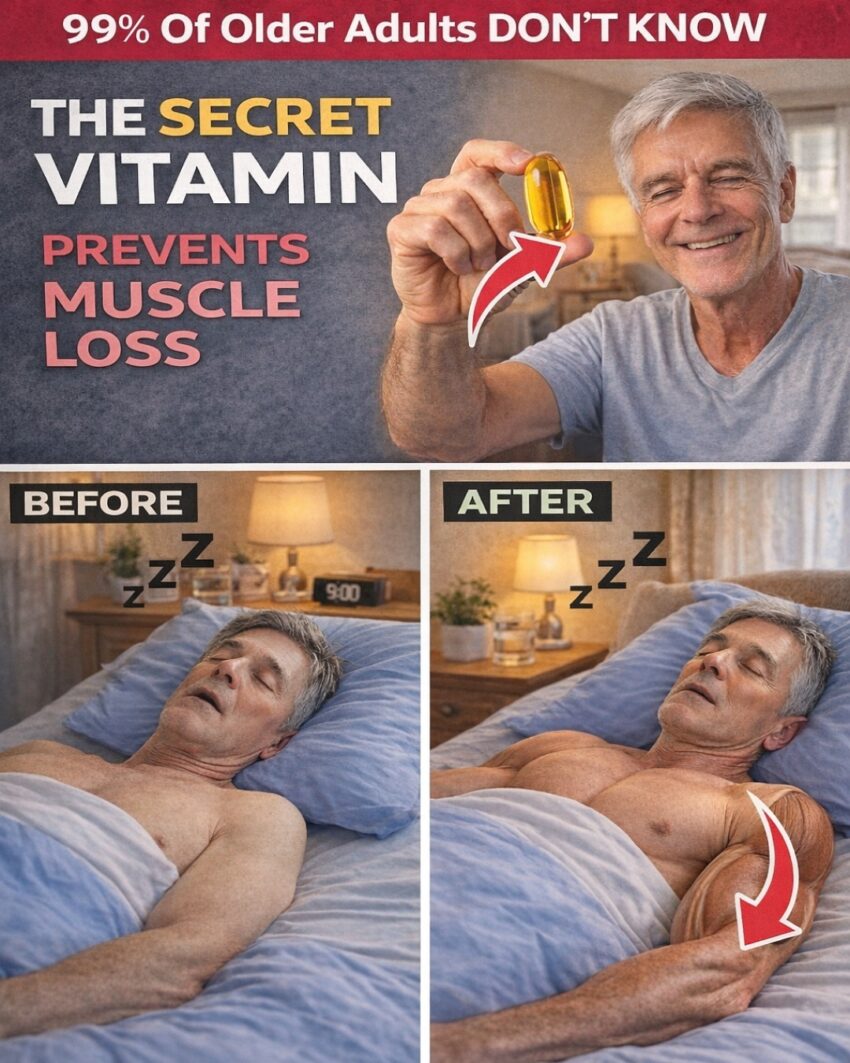
Headlines like “take these 3 vitamins to prevent muscle loss” are over-simplified. Muscle loss in older adults is a real condition called sarcopenia, but it cannot be prevented by vitamins alone.
Sarcopenia is mainly influenced by protein intake, physical activity, hormones, and overall health, not just supplements.
That said, some vitamins and nutrients do play supportive roles:
💪 1. Vitamin D
- Helps muscles contract properly
- Low levels are linked with weakness and falls
- Supports bone health alongside muscle function
👉 Best sources: sunlight, fortified milk, eggs, fish
🧠 2. Vitamin B12
- Important for nerve function and muscle coordination
- Deficiency can cause weakness, fatigue, and balance problems
- Commonly low in older adults
👉 Best sources: meat, dairy, eggs (or supplements if needed)
🦴 3. Vitamin C (and antioxidants)
- Helps in collagen formation, which supports muscle and connective tissue
- Reduces oxidative stress in aging muscles
- Supports recovery after physical activity
👉 Best sources: citrus fruits, peppers, tomatoes
⚠️ Important truth
Even with vitamins, you will still lose muscle if you don’t do this:
🏋️ 1. Strength training (most important)
- Walking alone is not enough
- Light resistance exercises 2–3 times/week helps maintain muscle
🍗 2. Enough protein
- Older adults often need more protein, not less
- Examples: eggs, chicken, fish, lentils, dairy
🧠 Bottom line
- Vitamins like D, B12, and C support muscle health
- But they do not prevent muscle loss on their own
- The real key to preventing Sarcopenia is:
- Protein
- Strength exercise
- Overall healthy lifestyle
If you want, I can create a simple 7-day diet + exercise plan for maintaining muscle after 60 👍
