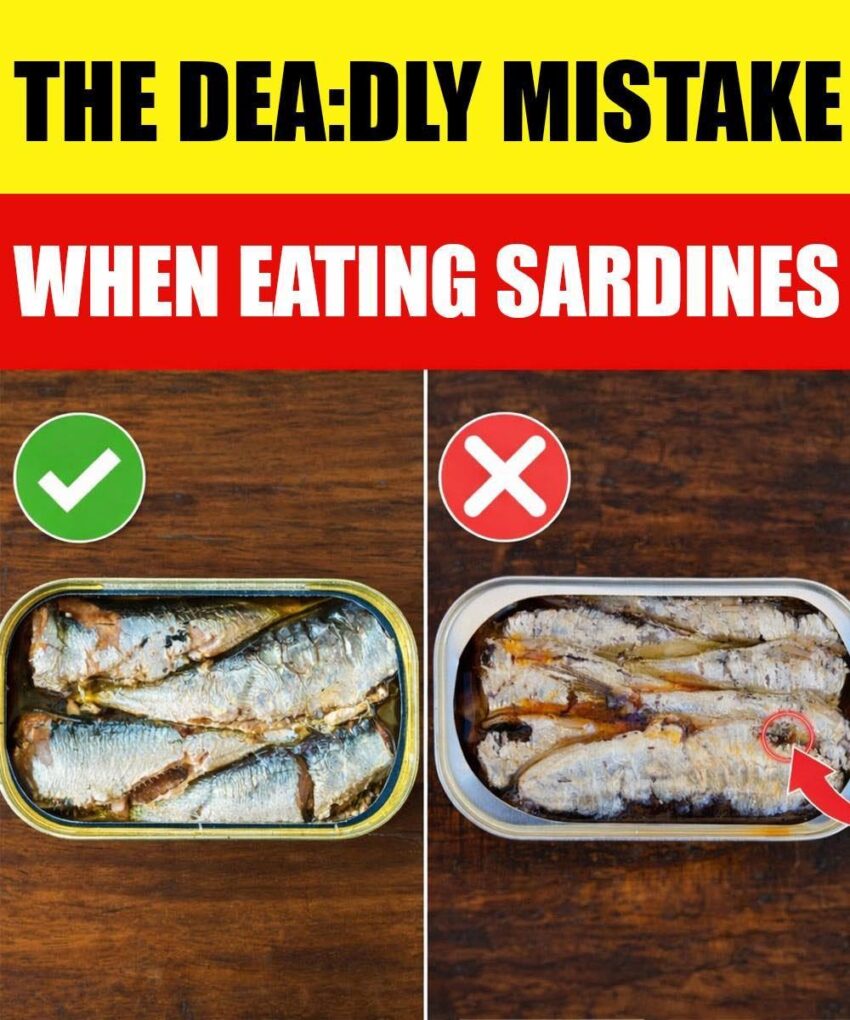
Eating sardines is generally healthy—they’re rich in omega-3s, protein, and minerals—but there are a few potentially dangerous mistakes people make that can turn it risky. 🐟⚠️
1. Ignoring Mercury and Heavy Metals
- Sardines are low in mercury compared to larger fish, but eating them from unknown sources or very large sardines repeatedly may increase exposure.
- Tip: Stick to trusted brands or canned sardines labeled “wild-caught.”
2. Eating Spoiled Sardines
- Canned or fresh sardines that are expired, bulging, or have an off smell can cause food poisoning.
- Tip: Always check expiration dates and packaging integrity.
3. Eating Too Much Salt
- Many canned sardines are high in sodium, which can raise blood pressure and strain the heart.
- Tip: Rinse canned sardines to reduce salt or choose low-sodium versions.
4. Allergic Reactions
- Fish allergies can trigger hives, swelling, or anaphylaxis, even in small amounts.
- Tip: If you’re allergic to fish or shellfish, avoid sardines.
5. Eating Bones Unsafely
- Sardines have soft bones that are edible and rich in calcium, but swallowing whole, uncooked bones carelessly could cause choking.
- Tip: Cooked or canned sardines’ bones are safe, but small children should be monitored.
6. Improper Storage
- Once opened, sardines spoil quickly. Leaving them at room temperature can lead to bacterial growth.
- Tip: Store leftovers in an airtight container in the fridge for up to 2 days.
✅ Bottom line: Sardines are safe and healthy if you choose trusted sources, check freshness, watch salt, and store them properly. The “deadly mistake” usually refers to eating spoiled or improperly stored sardines, which can cause serious food poisoning.
If you want, I can also give a step-by-step guide on how to safely eat sardines every day without risk, including low-sodium prep tricks and calcium boost tips.
