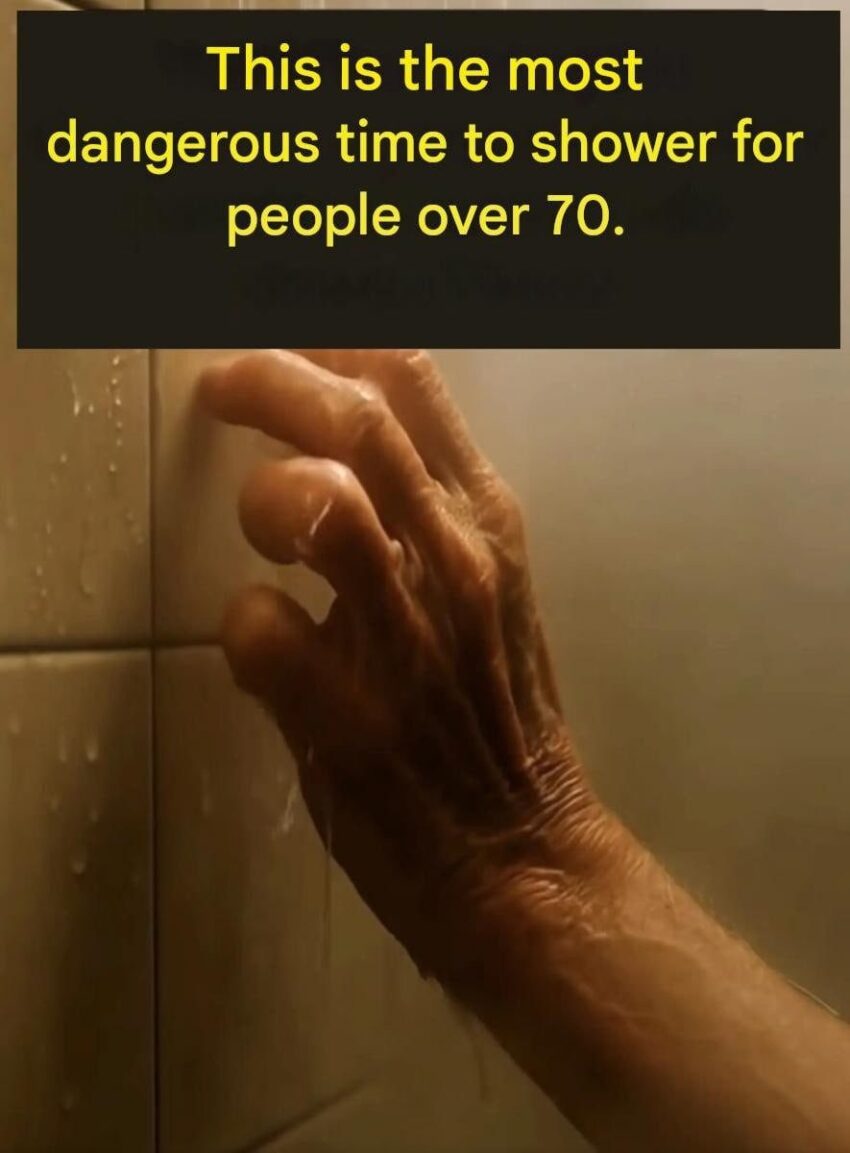
Headlines like that can sound scary, but there isn’t one universal “most dangerous time” to shower for everyone over 70. The real issue is risk factors, especially for falls and sudden drops in blood pressure.
That said, there are times that can be riskier for some older adults:
🚿 Potentially Riskier Shower Times
1️⃣ Very Early Morning (Right After Waking)
- Blood pressure can be lower or fluctuate.
- Standing up quickly + warm water can cause dizziness or lightheadedness.
- This increases fall risk.
2️⃣ Immediately After Taking Blood Pressure Medication
- Some medications can cause orthostatic hypotension (a drop in blood pressure when standing).
- Warm showers widen blood vessels, which may worsen that effect.
3️⃣ When Feeling Weak, Ill, or Dehydrated
- Dehydration makes dizziness more likely.
- Illness can reduce balance and reaction time.
4️⃣ Very Hot Showers (Any Time of Day)
- Hot water dilates blood vessels.
- Can trigger fainting in sensitive individuals.
- Also dries aging skin, increasing irritation and itchiness.
🚨 Why Showering Can Be Risky After 70
- Balance changes with age.
- Slower reflexes.
- More medications that affect blood pressure.
- Slippery surfaces increase fall risk.
Falls in the bathroom are one of the most common household injuries in older adults.
✅ How to Make Showering Safer
- Use lukewarm water, not hot.
- Install grab bars and non-slip mats.
- Consider a shower chair.
- Take your time when standing up.
- Keep the bathroom well-lit.
- Shower when you feel strongest (often mid-morning or afternoon).
The Bottom Line
It’s not about a specific “forbidden hour.”
The real concern is hot water + blood pressure changes + fall risk.
If you’d like, I can give you a quick bathroom safety checklist specifically for adults over 70 that dramatically reduces risk.
