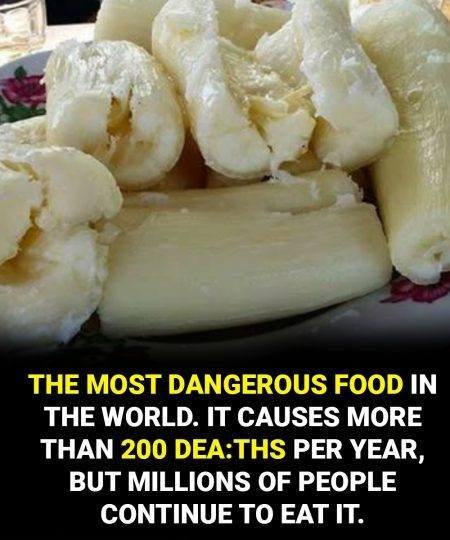
That line fits cassava almost perfectly.
Cassava (also called manioc, yuca—not yucca) is one of the most widely consumed staple foods on Earth, feeding hundreds of millions of people across Africa, Latin America, and Asia. But it has a darker side:
Cassava naturally contains cyanogenic glycosides, compounds that can release cyanide if the plant isn’t properly processed. When cassava is eaten raw or inadequately prepared, it can cause acute poisoning, neurological damage, or—over long periods—serious diseases like konzo, a form of paralysis documented in some regions.
What makes cassava fascinating (and unsettling) is the contrast:
- 🌍 Essential global staple
- ☠️ Potentially toxic in its natural state
- 🧠 Safety depends entirely on human knowledge and preparation
Traditional cultures developed processing methods—like soaking, fermenting, drying, and thorough cooking—that reduce toxicity and make cassava safe to eat. Where those practices break down (often due to conflict, famine, or lack of resources), health risks rise sharply.
If you’re using this as a headline, essay hook, or discussion prompt, it’s strong because it highlights how “natural” doesn’t automatically mean safe—and how food security is tied not just to crops, but to cultural knowledge.
If you want, I can help you:
- Turn this into a punchy article intro
- Compare cassava with other “dangerous foods” (fugu, ackee, bitter almonds)
- Tighten it into a more journalistic or academic headline
