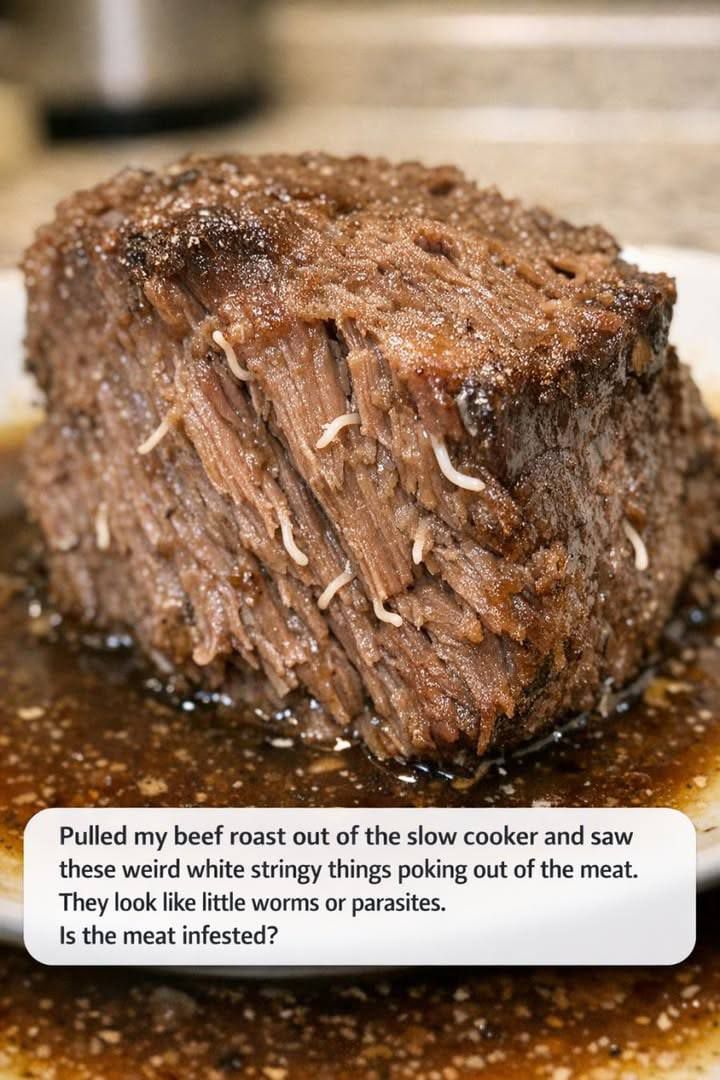
Totally understandable to be alarmed — but in almost every case, those “white stringy worm-like” things in a slow-cooked beef roast are not parasites.
Here’s what you’re most likely seeing 👇
🥩 1. Connective Tissue (Collagen)
Beef roasts (like chuck or shoulder) are full of connective tissue.
When slow cooked:
- Collagen breaks down
- It turns gelatinous
- It can separate into white or translucent stringy strands
These can look surprisingly like little worms, especially when they’re sticking out of shredded meat.
This is completely normal and safe.
🧵 2. Elastin (Tough Silver Skin)
Some roasts contain elastin, a fibrous tissue that:
- Doesn’t fully break down with cooking
- Stays stringy and slightly rubbery
- Can pull away in white strands
It’s harmless — just chewy.
🧠 Why It Looks Creepy
When meat cooks slowly:
- Muscle fibers shrink
- Fat renders
- Connective tissue separates
That combination can make normal tissue look “alive” or worm-like.
❗ What It Is Not
Beef sold in regular grocery stores in most countries is:
- Inspected
- Regulated
- Very unlikely to contain visible parasites
Also:
- Parasites in beef are extremely rare
- They don’t usually survive long, high-heat slow cooking
🚩 When to Be Concerned
Consider discarding only if you notice:
- Foul or rotten smell
- Slimy texture before cooking
- Unusual green/gray discoloration
- Movement (very unlikely after cooking)
If it just looks like white strands and the roast smells normal and cooked properly, it’s almost certainly connective tissue.
If you want, you can describe:
- Were they thick or thin?
- Firm or jelly-like?
- Throughout the meat or only in certain spots?
I can help you narrow it down.
